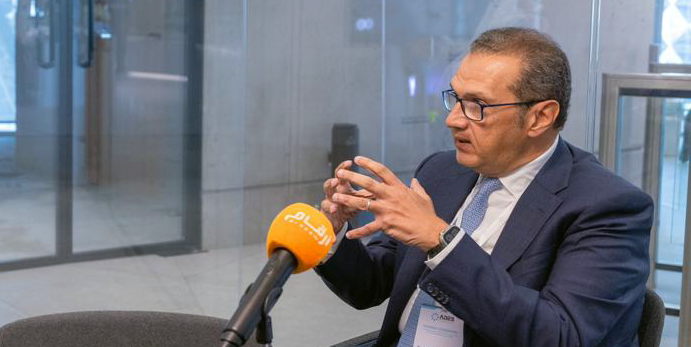
Mohammed Farouk, CEO and Vice Chairman of ADES Holding Co.
He also noted that the decline is expected to bolster profit margins, although the ultimate cost will continue to depend on geopolitical developments and conditions in the insurance market. 
In an interview with Argaam, Farouk added that the geographic diversification of the company’s operations across GCC countries and markets outside the bloc provides flexibility in responding to disruptions or cost increases in any particular region.
As regards global demand for drilling rigs, Farouk said ADES remains positive about the outlook for the global shallow-water offshore drilling market, supported by the ongoing need to offset the natural decline in field production, sustain production capacity and strengthen energy security.
He explained that supply-side dynamics remain an important factor, given the severe limitations on the availability of new drilling rigs and the continued tight supply of high-specification jack-up offshore rigs. The latest market estimates indicate that global utilization of offshore jack-up rigs stands at around 90%, he noted.
Moreover, the higher oil prices support oil companies’ cash flows and their ability to invest in exploration and production activities. However, energy security and the need to offset natural production declines are more structural drivers of drilling services demand than short-term movements in oil prices, according to the top executive.
The CEO also noted that geopolitical tensions may cause short-term operational disruptions, as witnessed in the Middle East, but they also reinforce the strategic importance of energy security, reliable supplies and maintaining sufficient drilling capacity.
These factors will also play a role in rebuilding strategic reserves, some of which have already been drawn down, with the possibility that reserves could be increased to higher levels in the future, he said.
Farouk further stressed that ADES’s geographic diversification allows the company to allocate its assets across different markets and capitalize on the most attractive opportunities, reducing the group’s dependence on any single region.
Regarding the new contract in Indonesia, Farouk said the contract’s effective daily operating rate is nearly $106,000, a highly positive commercial level for the Southeast Asian market. He expects the contract’s overall profitability to be broadly in line with the margins generated by the company’s offshore operations.
He added that the contract’s contribution to the company’s revenue and cash flows will be concentrated mainly in 2027, with a limited contribution in early 2028.
According to Argaam data, ADES announced yesterday it signed a new contract for its jack-up rig Shelf Drilling Perseverance in Indonesia with PT Pertamina Hulu Mahakam (PHM), with a total value of approximately SAR 173.14 million ($46.17 million) for both the firm and optional periods. Operations are expected to begin around late December 2026.
Mohammed Farouk, CEO and Vice Chairman of ADES Holding Co.
He also noted that the decline is expected to bolster profit margins, although the ultimate cost will continue to depend on geopolitical developments and conditions in the insurance market.
In an interview with Argaam, Farouk added that the geographic diversification of the company’s operations across GCC countries and markets outside the bloc provides flexibility in responding to disruptions or cost increases in any particular region.
As regards global demand for drilling rigs, Farouk said ADES remains positive about the outlook for the global shallow-water offshore drilling market, supported by the ongoing need to offset the natural decline in field production, sustain production capacity and strengthen energy security.
He explained that supply-side dynamics remain an important factor, given the severe limitations on the availability of new drilling rigs and the continued tight supply of high-specification jack-up offshore rigs. The latest market estimates indicate that global utilization of offshore jack-up rigs stands at around 90%, he noted.
Moreover, the higher oil prices support oil companies’ cash flows and their ability to invest in exploration and production activities. However, energy security and the need to offset natural production declines are more structural drivers of drilling services demand than short-term movements in oil prices, according to the top executive.
The CEO also noted that geopolitical tensions may cause short-term operational disruptions, as witnessed in the Middle East, but they also reinforce the strategic importance of energy security, reliable supplies and maintaining sufficient drilling capacity.
These factors will also play a role in rebuilding strategic reserves, some of which have already been drawn down, with the possibility that reserves could be increased to higher levels in the future, he said.
Farouk further stressed that ADES’s geographic diversification allows the company to allocate its assets across different markets and capitalize on the most attractive opportunities, reducing the group’s dependence on any single region.
Regarding the new contract in Indonesia, Farouk said the contract’s effective daily operating rate is nearly $106,000, a highly positive commercial level for the Southeast Asian market. He expects the contract’s overall profitability to be broadly in line with the margins generated by the company’s offshore operations.
He added that the contract’s contribution to the company’s revenue and cash flows will be concentrated mainly in 2027, with a limited contribution in early 2028.
According to Argaam data, ADES announced yesterday it signed a new contract for its jack-up rig Shelf Drilling Perseverance in Indonesia with PT Pertamina Hulu Mahakam (PHM), with a total value of approximately SAR 173.14 million ($46.17 million) for both the firm and optional periods. Operations are expected to begin around late December 2026.