


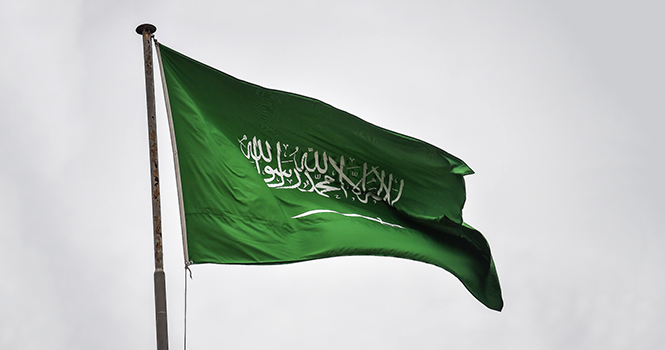
The Kingdom of Saudi Arabia’s flag

Moody’s Ratings said Saudi Arabia’s preliminary budget statement points to renewed spending restraint despite a wider deficit in 2026, adding that the fiscal recovery planned for 2027 supports its view that prudent fiscal management will remain a key factor in spending and borrowing decisions.
In a report, the ratings agency highlighted that a large near-term deficit, by itself, does not change its fundamental assessment of Saudi Arabia, noting that the Kingdom’s established fiscal strengths support its rating.
Moody’s expects GDP to contract by 3.3% in 2026 before growing 8.5% in 2027, compared with the government’s forecasts for a 3.6% contraction followed by growth of around 12.8%, respectively. It explained that its forecasts reflect weaker non-oil growth and a more moderate recovery.
The medium-term debt trajectory remains broadly consistent with previous forecast of an increase to 40% of GDP by the end of the current decade, provided that fiscal recovery is achieved. The effectiveness of government spending restraint will be a key factor determining the debt trajectory and its credit implications, it added.
Moody’s also said the pre-budget statement raised the expected deficit for 2026 to SAR 245 billion, equivalent to 4.9% of GDP, from SAR 165 billion, or 3.3%, in the original budget, indicating weaker near-term fiscal performance.
It noted that the deficit revision reflects spending exceeding the original budget rather than lower-than-budgeted revenue. Expected spending rose 9% to SAR 1.435 trillion from SAR 1.313 trillion, while revenue increased 4% to SAR 1.190 trillion from SAR 1.147 trillion.
Higher oil prices have cushioned the impact of lower production and exports, Moody’s said, but prolonged trade disruptions and additional spending have limited the fiscal improvement it previously expected.
For 2027, the agency expects spending to decline by around SAR 43 billion, or 3%, to SAR 1.392 trillion, while revenue is forecast to increase 1% to SAR 1.202 trillion. This would reduce the expected deficit to SAR 191 billion, or 3.6% of GDP.
It expects the fiscal deficit to remain at levels equivalent to 3.1% of GDP in 2028 and 3.3% in 2029.
Moody’s confirmed that government financial assets, including central bank deposits and the relatively liquid assets of the Public Investment Fund (PIF) after deducting its direct debt, amounted to around 18% of GDP at end-2025. Readily accessible deposits at the Saudi Central Bank (SAMA) also exceeded 9% of GDP.
It added that strong access to capital markets provides Saudi Arabia with fiscal flexibility, while the authorities’ track record in controlling spending, implementing revenue measures, and reprioritizing projects supports policy credibility.
The agency believes that reprioritizing investments linked to Saudi Vision 2030 could preserve fiscal space while economic diversification continues. Focusing resources on projects with strong returns would likely help reconcile growth objectives with spending restraint.
Moody’s identified the duration and severity of the regional conflict as the main downside credit risk. It noted that continued disruption to the East-West Pipeline, Red Sea terminals, or shipping routes through the Bab El-Mandeb Strait could weaken oil revenues and external accounts, potentially outweighing the benefits of higher prices.
It added that prolonged insecurity could weigh on tourism, investor confidence, and the outlook for diversification, while substantial revenues would likely provide only limited protection against sustained damage to export capacity.
Moody’s also said insufficient and sustained fiscal recovery, a significant increase in debt, depletion of reserves, or continued damage to export capacity and non-oil growth are not included in its baseline scenario, but would likely increase downside pressure on Saudi Arabia’s credit profile.
The Kingdom of Saudi Arabia’s flag
Moody’s Ratings said Saudi Arabia’s preliminary budget statement points to renewed spending restraint despite a wider deficit in 2026, adding that the fiscal recovery planned for 2027 supports its view that prudent fiscal management will remain a key factor in spending and borrowing decisions.
In a report, the ratings agency highlighted that a large near-term deficit, by itself, does not change its fundamental assessment of Saudi Arabia, noting that the Kingdom’s established fiscal strengths support its rating.
Moody’s expects GDP to contract by 3.3% in 2026 before growing 8.5% in 2027, compared with the government’s forecasts for a 3.6% contraction followed by growth of around 12.8%, respectively. It explained that its forecasts reflect weaker non-oil growth and a more moderate recovery.
The medium-term debt trajectory remains broadly consistent with previous forecast of an increase to 40% of GDP by the end of the current decade, provided that fiscal recovery is achieved. The effectiveness of government spending restraint will be a key factor determining the debt trajectory and its credit implications, it added.
Moody’s also said the pre-budget statement raised the expected deficit for 2026 to SAR 245 billion, equivalent to 4.9% of GDP, from SAR 165 billion, or 3.3%, in the original budget, indicating weaker near-term fiscal performance.
It noted that the deficit revision reflects spending exceeding the original budget rather than lower-than-budgeted revenue. Expected spending rose 9% to SAR 1.435 trillion from SAR 1.313 trillion, while revenue increased 4% to SAR 1.190 trillion from SAR 1.147 trillion.
Higher oil prices have cushioned the impact of lower production and exports, Moody’s said, but prolonged trade disruptions and additional spending have limited the fiscal improvement it previously expected.
For 2027, the agency expects spending to decline by around SAR 43 billion, or 3%, to SAR 1.392 trillion, while revenue is forecast to increase 1% to SAR 1.202 trillion. This would reduce the expected deficit to SAR 191 billion, or 3.6% of GDP.
It expects the fiscal deficit to remain at levels equivalent to 3.1% of GDP in 2028 and 3.3% in 2029.
Moody’s confirmed that government financial assets, including central bank deposits and the relatively liquid assets of the Public Investment Fund (PIF) after deducting its direct debt, amounted to around 18% of GDP at end-2025. Readily accessible deposits at the Saudi Central Bank (SAMA) also exceeded 9% of GDP.
It added that strong access to capital markets provides Saudi Arabia with fiscal flexibility, while the authorities’ track record in controlling spending, implementing revenue measures, and reprioritizing projects supports policy credibility.
The agency believes that reprioritizing investments linked to Saudi Vision 2030 could preserve fiscal space while economic diversification continues. Focusing resources on projects with strong returns would likely help reconcile growth objectives with spending restraint.
Moody’s identified the duration and severity of the regional conflict as the main downside credit risk. It noted that continued disruption to the East-West Pipeline, Red Sea terminals, or shipping routes through the Bab El-Mandeb Strait could weaken oil revenues and external accounts, potentially outweighing the benefits of higher prices.
It added that prolonged insecurity could weigh on tourism, investor confidence, and the outlook for diversification, while substantial revenues would likely provide only limited protection against sustained damage to export capacity.
Moody’s also said insufficient and sustained fiscal recovery, a significant increase in debt, depletion of reserves, or continued damage to export capacity and non-oil growth are not included in its baseline scenario, but would likely increase downside pressure on Saudi Arabia’s credit profile.




