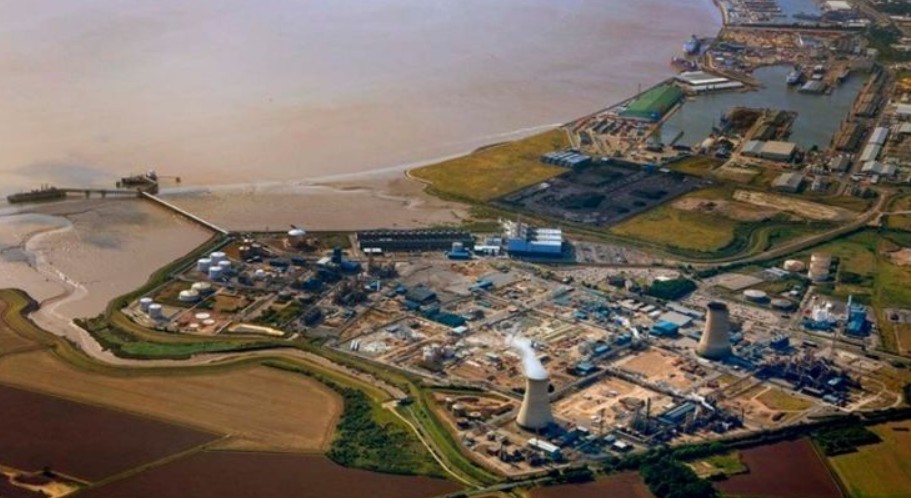
One of INEOS’s plants
INEOS has suspended operations at its three chemical plants in Hull, eastern Britain, until further notice, as European gas prices have risen to around 12 times US levels, making the facilities uncompetitive, the company said.
In a statement seen by Argaam, INEOS said the three plants are Europe’s last remaining large-scale industrial acetyls production units, following the closure of other facilities due to high energy costs and their inability to compete.
Two of the plants have already stopped production, while the third is expected to halt operations within days of the decision announced on Sept. 22, 2026.
The facilities are located at the Saltend Chemicals Park in Hull, eastern Britain, and produce intermediate chemicals used across a wide range of European industries and products, including pharmaceuticals, food, clothing, cosmetics, detergents, construction materials and high-energy military explosives.
The acetic acid plant has an annual production capacity of around 500,000 tons, while the acetic anhydride and ethyl acetate plants have capacities of around 150,000 tons and 200,000 tons per year, respectively, according to INEOS data on its Hull site.
INEOS said the plants use gas both as an energy source and as feedstock in the production process, making their competitiveness highly sensitive to gas price differentials between Europe and competing production regions.
European gas prices have reached around 12 times US levels, while gas in Europe is around eight times more expensive than coal-based production in China, the company said.
INEOS said its Hull facilities are among its most efficient globally following repeated investments by the company and operate at the lowest possible levels of carbon dioxide emissions.
The carbon footprint of products made in the US is around twice that of products manufactured in Hull, while the carbon footprint of Chinese products is around eight times higher, it added.
INEOS Chairman Jim Ratcliffe said high energy costs, coupled with carbon taxes, are putting pressure on Europe’s manufacturing base and making its plants uncompetitive with producers in the US and China.
He added that replacing European production with imports from the US and China would increase emissions, saying current policies encourage coal-based production in China and the movement of jobs from Europe to China and the US.
The pressure is not limited to high energy costs. INEOS has previously pointed to growing competition from low-cost Chinese imports in UK and European markets. In October 2025, it announced 60 job cuts at its Hull acetyls plant, equivalent to 20% of its workforce at the time. The company says the three plants support around 4,000 skilled jobs, with their products sold across Europe.
Could Saudi producers benefit?
A prolonged shutdown of INEOS’ facilities could increase European demand for alternative supplies of acetyls products, particularly as the three units are the last large-scale industrial facilities of their kind in Europe, potentially creating opportunities for suppliers outside the continent.
Sipchem stands out among Saudi producers directly linked to some of these products. Its wholly owned International Acetyl Company in Jubail operates a plant producing acetic acid and acetic anhydride.
Sipchem also owns International Vinyl Acetate Company, which produces vinyl acetate monomer with an annual capacity of 330,000 tons, according to the company’s 2025 board report.
Sipchem has previously said that part of International Acetyl Company’s output is used as feedstock to produce vinyl acetate monomer, while the remainder is shipped to regional and international customers.
The shutdown of INEOS’ facilities does not necessarily mean demand will automatically shift to Saudi producers. Any potential benefit will depend on the extent of the supply shortfall in Europe, product prices, shipping costs and the availability of exportable volumes, as well as competition from suppliers in the US and Asia.
With Europe’s last large-scale industrial acetyls units shutting down, the European market could become increasingly reliant on imports and alternative supplies to meet part of its demand.

One of INEOS’s plants
INEOS has suspended operations at its three chemical plants in Hull, eastern Britain, until further notice, as European gas prices have risen to around 12 times US levels, making the facilities uncompetitive, the company said.
In a statement seen by Argaam, INEOS said the three plants are Europe’s last remaining large-scale industrial acetyls production units, following the closure of other facilities due to high energy costs and their inability to compete.
Two of the plants have already stopped production, while the third is expected to halt operations within days of the decision announced on Sept. 22, 2026.
The facilities are located at the Saltend Chemicals Park in Hull, eastern Britain, and produce intermediate chemicals used across a wide range of European industries and products, including pharmaceuticals, food, clothing, cosmetics, detergents, construction materials and high-energy military explosives.
The acetic acid plant has an annual production capacity of around 500,000 tons, while the acetic anhydride and ethyl acetate plants have capacities of around 150,000 tons and 200,000 tons per year, respectively, according to INEOS data on its Hull site.
INEOS said the plants use gas both as an energy source and as feedstock in the production process, making their competitiveness highly sensitive to gas price differentials between Europe and competing production regions.
European gas prices have reached around 12 times US levels, while gas in Europe is around eight times more expensive than coal-based production in China, the company said.
INEOS said its Hull facilities are among its most efficient globally following repeated investments by the company and operate at the lowest possible levels of carbon dioxide emissions.
The carbon footprint of products made in the US is around twice that of products manufactured in Hull, while the carbon footprint of Chinese products is around eight times higher, it added.
INEOS Chairman Jim Ratcliffe said high energy costs, coupled with carbon taxes, are putting pressure on Europe’s manufacturing base and making its plants uncompetitive with producers in the US and China.
He added that replacing European production with imports from the US and China would increase emissions, saying current policies encourage coal-based production in China and the movement of jobs from Europe to China and the US.
The pressure is not limited to high energy costs. INEOS has previously pointed to growing competition from low-cost Chinese imports in UK and European markets. In October 2025, it announced 60 job cuts at its Hull acetyls plant, equivalent to 20% of its workforce at the time. The company says the three plants support around 4,000 skilled jobs, with their products sold across Europe.
Could Saudi producers benefit?
A prolonged shutdown of INEOS’ facilities could increase European demand for alternative supplies of acetyls products, particularly as the three units are the last large-scale industrial facilities of their kind in Europe, potentially creating opportunities for suppliers outside the continent.
Sipchem stands out among Saudi producers directly linked to some of these products. Its wholly owned International Acetyl Company in Jubail operates a plant producing acetic acid and acetic anhydride.
Sipchem also owns International Vinyl Acetate Company, which produces vinyl acetate monomer with an annual capacity of 330,000 tons, according to the company’s 2025 board report.
Sipchem has previously said that part of International Acetyl Company’s output is used as feedstock to produce vinyl acetate monomer, while the remainder is shipped to regional and international customers.
The shutdown of INEOS’ facilities does not necessarily mean demand will automatically shift to Saudi producers. Any potential benefit will depend on the extent of the supply shortfall in Europe, product prices, shipping costs and the availability of exportable volumes, as well as competition from suppliers in the US and Asia.
With Europe’s last large-scale industrial acetyls units shutting down, the European market could become increasingly reliant on imports and alternative supplies to meet part of its demand.