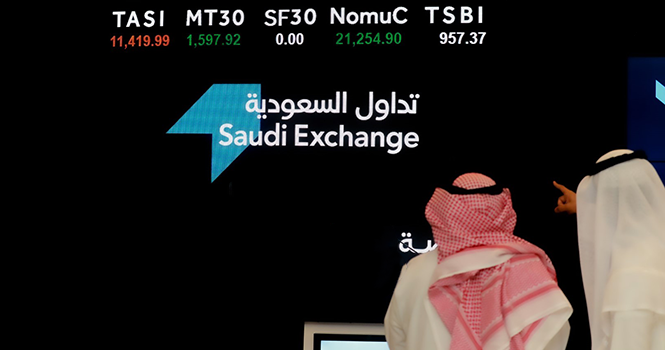
Tadawul trading screen
According to the latest liquidity classification file issued by the Saudi Exchange (Tadawul), the Main Market comprises 274 securities, of which 163 are classified as Category A, “very high liquidity,” representing approximately 59.5% of the market. The remaining 111 securities, or around 40.5%, fall into the other four categories that could be subject to the proposed restriction. 
Tadawul classifies securities into five groups based on the Relative Time Weighted Average Spread (RTWAS) over the previous six months. The classifications are reviewed and published semiannually and take effect on the first trading day of January and July.
Liquidity Category Number of Securities Share of Main Market
A – Very High
163
59.5%
B – High
63
23.0%
C – Medium
30
10.9%
D – Low
15
5.5%
E – Very Low
3
1.1%
Total
274
100%
Tadawul sets the thresholds at an average RTWAS of 0.20% or less for Category A, 0.30% for Category B, 0.40% for Category C, 0.50% for Category D, and above 0.50% for Category E.
The classification does not depend solely on trading value or the number of transactions. Instead, it primarily measures the width of the spread between the best bid and best ask prices, taking into account the length of time for which the spread remains at a given level.
Put simply, the narrower the bid-ask spread and the longer it remains at low levels, the lower the RTWAS and the higher the security’s liquidity classification.
Securities in Categories B to E
Below are the securities falling into the four categories that could be subject to the proposed restriction, according to the current liquidity classification file issued by Tadawul.
Category B – High Liquidity: 63 Securities
Company / Fund
Ticker
Company / Fund
Ticker
BCI
1210
SHL
1183
SMASCO
1834
Aslak
1301
SARCO
2030
Chemanol
2001
Wafrah
2100
National Gypsum
2090
SIDC
2130
Saudi Cable
2110
Tanmiah
2281
Maadaniyah
2220
MC4
2286
Naqi Water
2282
Nofoth
2288
Entaj
2287
Saudi Kayan
2350
Saudi Paper
2300
Northern Cement
3004
Najran Cement
3002
Tabuk Cement
3090
Umm Al-Qura Cement
3005
Farm Superstores
4006
Al Jouf Cement
3091
Lazurde
4011
SACO
4008
CMCER
4021
Equipment House
4014
Tihama
4070
Baazeem
4051
GAS
4146
Al-Omran
4141
BinDawood Holding
4161
CGS
4147
Saudi Printing
4270
Alsaif Gallery
4192
KEC
4310
NCLE
4291
Riyad REIT
4330
Sumou
4323
Al Maather REIT
4334
Taleem REIT
4333
SEDCO Capital REIT
4344
AlAhli REIT (1)
4338
Alkhabeer REIT
4348
Bonyan REIT
4347
Alkhabeer Diversified Income Traded Fund
4700
Alistithmar AREIC Diversified REIT Fund
4350
SEDCO Capital Multi Asset Fund
4703
Alkhabeer Diversified Income Traded Fund 2030
4702
Herfy
6002
Halwani Bros
6001
Al-Jouf Agricultural
6070
Ash-Sharqiyah
6060
Saudi Azm
7211
2P
7204
Walaa
8060
Jazira Takaful
8012
ACIG
8150
Arabian Shield
8070
GIG
8250
Al Sagr
8180
Wataniya Insurance
8300
Category C – Medium Liquidity: 30 Securities
Company / Fund
Ticker
Company / Fund
Ticker
FIPCO
2180
Takween
1201
ARTEX
2340
Nama Chemicals
2210
Thob Al Aseel
4012
Ceramic Pipes
2360
MRNA
4082
Sinad
4080
Ataa
4292
Raoom
4144
Alramz
4327
Alandalus
4320
Musharaka REIT
4335
Jadwa REIT Al Haramain
4332
Derayah REIT
4339
Mulkia REIT
4336
MEFIC REIT
4346
Alinma Retail REIT
4345
Development Works Food
6013
Raydan
6012
TADCO
6040
Qassim Holding
6020
Malath
8020
Arab Sea
7201
SAICO
8100
Mutakamela Insurance
8040
Al-Etihad Insurance
8170
AICC
8160
Saudi Enaya
8311
Amana Insurance
8310
Category D – Low Liquidity: 15 Securities
Company / Fund
Ticker
Company / Fund
Ticker
Zahrat Al Waha
3007
Sadr
1832
Al-Baha
4130
Batic
4110
Alwasail
4148
SIECO
4140
Banan
4324
Fitaihi Group
4180
JAZADCO
6090
SICO Saudi REIT
4337
Gulf Union Alahlia
8120
Salama
8050
Gulf General
8260
UCA
8190
LIVA
8280
Category E – Very Low Liquidity: 3 Securities
Company
Ticker
BAAN Holding
1820
Al Kathiri
3008
Americana
6015
Classification Already Used in Market Regulation
The division of securities into the five categories is not merely a statistical classification, as Tadawul already uses it to regulate certain market-making requirements.
The obligations relating to the percentage of time orders must remain in the market, minimum order size and maximum bid-ask spread vary according to the liquidity category to which a security belongs. For example, Tadawul requires a market maker for Category A securities to maintain orders in the market for at least 80% of trading time, with a maximum spread of 0.65%, while requirements differ for the other categories.
Accordingly, using the same liquidity classification in the algorithmic trading draft represents an extension of an existing approach based on differences in securities’ capacity to absorb orders according to their liquidity levels.
Tadawul trading screen
According to the latest liquidity classification file issued by the Saudi Exchange (Tadawul), the Main Market comprises 274 securities, of which 163 are classified as Category A, “very high liquidity,” representing approximately 59.5% of the market. The remaining 111 securities, or around 40.5%, fall into the other four categories that could be subject to the proposed restriction.
Tadawul classifies securities into five groups based on the Relative Time Weighted Average Spread (RTWAS) over the previous six months. The classifications are reviewed and published semiannually and take effect on the first trading day of January and July.
Liquidity Category Number of Securities Share of Main Market
A – Very High
163
59.5%
B – High
63
23.0%
C – Medium
30
10.9%
D – Low
15
5.5%
E – Very Low
3
1.1%
Total
274
100%
Tadawul sets the thresholds at an average RTWAS of 0.20% or less for Category A, 0.30% for Category B, 0.40% for Category C, 0.50% for Category D, and above 0.50% for Category E.
The classification does not depend solely on trading value or the number of transactions. Instead, it primarily measures the width of the spread between the best bid and best ask prices, taking into account the length of time for which the spread remains at a given level.
Put simply, the narrower the bid-ask spread and the longer it remains at low levels, the lower the RTWAS and the higher the security’s liquidity classification.
Securities in Categories B to E
Below are the securities falling into the four categories that could be subject to the proposed restriction, according to the current liquidity classification file issued by Tadawul.
Category B – High Liquidity: 63 Securities
Company / Fund
Ticker
Company / Fund
Ticker
BCI
1210
SHL
1183
SMASCO
1834
Aslak
1301
SARCO
2030
Chemanol
2001
Wafrah
2100
National Gypsum
2090
SIDC
2130
Saudi Cable
2110
Tanmiah
2281
Maadaniyah
2220
MC4
2286
Naqi Water
2282
Nofoth
2288
Entaj
2287
Saudi Kayan
2350
Saudi Paper
2300
Northern Cement
3004
Najran Cement
3002
Tabuk Cement
3090
Umm Al-Qura Cement
3005
Farm Superstores
4006
Al Jouf Cement
3091
Lazurde
4011
SACO
4008
CMCER
4021
Equipment House
4014
Tihama
4070
Baazeem
4051
GAS
4146
Al-Omran
4141
BinDawood Holding
4161
CGS
4147
Saudi Printing
4270
Alsaif Gallery
4192
KEC
4310
NCLE
4291
Riyad REIT
4330
Sumou
4323
Al Maather REIT
4334
Taleem REIT
4333
SEDCO Capital REIT
4344
AlAhli REIT (1)
4338
Alkhabeer REIT
4348
Bonyan REIT
4347
Alkhabeer Diversified Income Traded Fund
4700
Alistithmar AREIC Diversified REIT Fund
4350
SEDCO Capital Multi Asset Fund
4703
Alkhabeer Diversified Income Traded Fund 2030
4702
Herfy
6002
Halwani Bros
6001
Al-Jouf Agricultural
6070
Ash-Sharqiyah
6060
Saudi Azm
7211
2P
7204
Walaa
8060
Jazira Takaful
8012
ACIG
8150
Arabian Shield
8070
GIG
8250
Al Sagr
8180
Wataniya Insurance
8300
Category C – Medium Liquidity: 30 Securities
Company / Fund
Ticker
Company / Fund
Ticker
FIPCO
2180
Takween
1201
ARTEX
2340
Nama Chemicals
2210
Thob Al Aseel
4012
Ceramic Pipes
2360
MRNA
4082
Sinad
4080
Ataa
4292
Raoom
4144
Alramz
4327
Alandalus
4320
Musharaka REIT
4335
Jadwa REIT Al Haramain
4332
Derayah REIT
4339
Mulkia REIT
4336
MEFIC REIT
4346
Alinma Retail REIT
4345
Development Works Food
6013
Raydan
6012
TADCO
6040
Qassim Holding
6020
Malath
8020
Arab Sea
7201
SAICO
8100
Mutakamela Insurance
8040
Al-Etihad Insurance
8170
AICC
8160
Saudi Enaya
8311
Amana Insurance
8310
Category D – Low Liquidity: 15 Securities
Company / Fund
Ticker
Company / Fund
Ticker
Zahrat Al Waha
3007
Sadr
1832
Al-Baha
4130
Batic
4110
Alwasail
4148
SIECO
4140
Banan
4324
Fitaihi Group
4180
JAZADCO
6090
SICO Saudi REIT
4337
Gulf Union Alahlia
8120
Salama
8050
Gulf General
8260
UCA
8190
LIVA
8280
Category E – Very Low Liquidity: 3 Securities
Company
Ticker
BAAN Holding
1820
Al Kathiri
3008
Americana
6015
Classification Already Used in Market Regulation
The division of securities into the five categories is not merely a statistical classification, as Tadawul already uses it to regulate certain market-making requirements.
The obligations relating to the percentage of time orders must remain in the market, minimum order size and maximum bid-ask spread vary according to the liquidity category to which a security belongs. For example, Tadawul requires a market maker for Category A securities to maintain orders in the market for at least 80% of trading time, with a maximum spread of 0.65%, while requirements differ for the other categories.
Accordingly, using the same liquidity classification in the algorithmic trading draft represents an extension of an existing approach based on differences in securities’ capacity to absorb orders according to their liquidity levels.