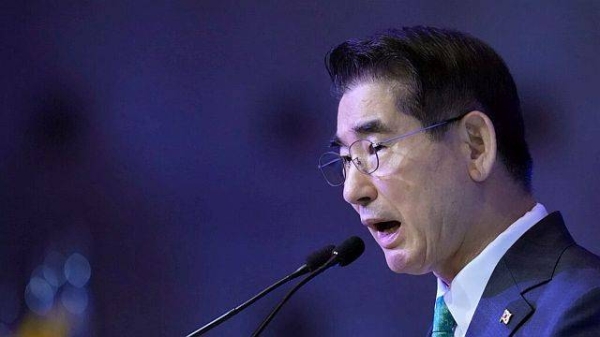
STRASBOURG — European Commission President Ursula von der Leyen told the European Parliament on Wednesday that she was “horrified by the images” of convicted war criminal Ratko Mladić’s funeral in Belgrade earlier this month, but stopped short of announcing any punitive measures against Serbia.”The glorification of war criminals simply has no place in the European Union,” von der Leyen said during her annual State of the European Union speech. She refrained from directly criticising Serbia despite calls for firmer action from the bloc.Mladić, known as the “Butcher of Bosnia”, died in August while serving a life sentence in The Hague for genocide, crimes against humanity and war crimes committed during the Bosnian War in the 1990s.His body was flown to Belgrade on a state plane, greeted by an honour guard by the Serbian military and various security forces, and commemorated by the public broadcaster and the Serbian Orthodox Church. His coffin was wrapped in a Serbian flag.Officials in Belgrade had previously denied that he would be given a funeral with state honours.The images prompted outrage across Europe, with Croatian Prime Minister Andrej Plenković criticising the EU’s muted response.The Commission helmed by von der Leyen had been pushing to advance Serbia’s bid to become an EU member by unlocking Cluster 3 talks on economic growth.But EU capitals blocked the move, citing persistent concerns over democratic backsliding – even after the Venice Commission said Belgrade had implemented most of its recommendations on judicial reforms.Diplomats have told Euronews that the funeral given to Mladić has effectively put Serbia’s accession push on hold, with one saying that “anyone even considering opening Cluster 3 will think twice”.Henrik Dahl, a Danish lawmaker for the European People’s Party (EPP), told Euronews on Tuesday that “Serbia has put themselves in the back of the waiting line (to join the EU) because they gave a state funeral to a war criminal”.Several EU lawmakers have also questioned the affiliation of Serbian President Aleksandar Vučić’s Serbian Progressive Party to the EPP, the centre-right political family to which von der Leyen belongs.The EU’s enlargement chief, Marta Kos, postponed her planned visit to Belgrade in response to the funeral, prompting speculation that von der Leyen could announce similar repercussions.The Commission chief is widely expected to tour Western Balkan candidate countries, including Serbia, this fall, but has refrained from confirming whether the programme for the visit is yet confirmed.On Tuesday, Kos said the glorification of war criminals, denial of genocide and historical revisionism are fundamentally incompatible with the European Union’s values, stressing that such practices have no place in either the EU or countries seeking membership.”Last year in Srebrenica, I witnessed the burial of seven more victims 30 years after the genocide. Many are still missing, and their families continue to suffer unimaginable pain. It is incomprehensible that anyone responsible for such crimes is honored as a hero,” Kos said during a European Parliament plenary session in Strasbourg, referring to the funeral of Mladic last week.She condemned the public honoring of Mladic, who was convicted of genocide and other war crimes, saying images from his funeral were “profoundly disturbing” and reflected a failure to confront the region’s past.”They show a failure to confront the past and contradict the values at the heart of European integration,” Kos said.She also expressed particular concern over the attendance at the funeral of Serbian ministers, state officials and military representatives, as well as leaders and politicians from Republika Srpska.Kos stressed that the EU does not seek to force Serbia to abandon its identity or history but expects the country to confront its past honestly, including its darkest chapters.”We can disagree about politics. We can have difficult conversations about reforms and about Serbia’s European path, but we cannot negotiate about the dignity of the victims of genocide and war crimes,” she added.
Keep Up to Date with our Weekly Newsletter