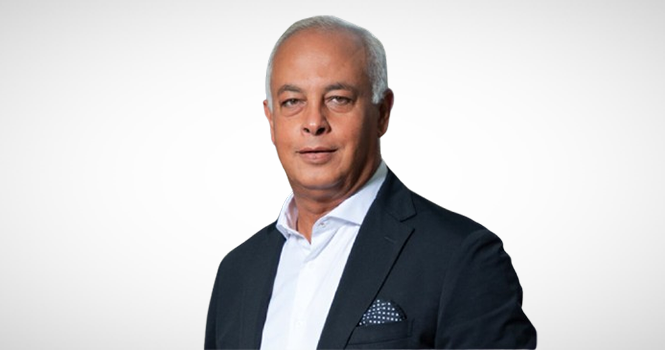
Tarek Youssef Hosni, CEO of Jamjoum Pharmaceuticals Factory Co. (Jamjoom Pharma) said that unprecedented challenges were faced this year, one of which was the geopolitical crisis in the Middle East, which affected the company as well as other firms operating in the pharmaceutical and other sectors. 
In an interview with Al Arabiya TV, Hosni explained that during the first two months of this year—even before the war began—the pharmaceutical market did not grow as strongly as it had in previous periods; on the contrary, it experienced a decline and a correction during those first two months. He noted that the Saudi market is a key market for the company, accounting for more than 50% of its business.
Supply chains were also affected by the geopolitical crisis, but the company had adopted a strategy several years ago to purchase raw materials and other supplies approximately 6 to 9 months in advance, said the CEO. He noted that during the first six months of this year, the company was not affected in terms of supply chains, as it was utilizing its existing inventory from those advance purchases.
“We may begin feeling the impact of supply chain disruptions by the end of the current or next quarter”, said Hosni, “The pressure on profits in the coming period will not be significant, but that one must take into account delays in the arrival of raw materials following a decline in inventory, or the unfavorable decision to transport raw materials via air freight, which will lead to additional costs of up to double or twice the usual amount.”
The CEO further stated that the company is awaiting the end of the war and its aftermath, as well as the conclusion of the current correction in the Saudi market, in order to resume solid growth.
As regards the weight-loss drug market, Hosni confirmed that Jamjoom Pharma has decided to enter this field, explaining that one of the avenues it is exploring involves forming partnerships with global companies that possess expertise and leading products in this sector.
“We are currently working to purchase raw materials from a weight-loss drug manufacturer whose patent is nearing expiration and will produce a similar drug and launch it on the market within 18 to 24 months,” he said.
The CEO also noted that the company is focusing on three segments. The first is diabetes medications; the company has launched seven to eight drugs in the Saudi market over the past three years. This is an important segment in which the company has a strong presence and has made a significant entry.
The second segment is biosimilars, where the company expects to obtain approvals in the Saudi market for its first two products during the fourth quarter of 2026 or the first quarter of 2027, Hosni added.
He explained that the third segment is strategic partnerships, specifically through a partnership with the Public Investment Fund via Lifera, where Jamjoom Pharma is working to facilitate the localization of vaccines and biopharmaceuticals, a process the company will begin in 2027.
Tarek Youssef Hosni, CEO of Jamjoum Pharmaceuticals Factory Co. (Jamjoom Pharma) said that unprecedented challenges were faced this year, one of which was the geopolitical crisis in the Middle East, which affected the company as well as other firms operating in the pharmaceutical and other sectors.
In an interview with Al Arabiya TV, Hosni explained that during the first two months of this year—even before the war began—the pharmaceutical market did not grow as strongly as it had in previous periods; on the contrary, it experienced a decline and a correction during those first two months. He noted that the Saudi market is a key market for the company, accounting for more than 50% of its business.
Supply chains were also affected by the geopolitical crisis, but the company had adopted a strategy several years ago to purchase raw materials and other supplies approximately 6 to 9 months in advance, said the CEO. He noted that during the first six months of this year, the company was not affected in terms of supply chains, as it was utilizing its existing inventory from those advance purchases.
“We may begin feeling the impact of supply chain disruptions by the end of the current or next quarter”, said Hosni, “The pressure on profits in the coming period will not be significant, but that one must take into account delays in the arrival of raw materials following a decline in inventory, or the unfavorable decision to transport raw materials via air freight, which will lead to additional costs of up to double or twice the usual amount.”
The CEO further stated that the company is awaiting the end of the war and its aftermath, as well as the conclusion of the current correction in the Saudi market, in order to resume solid growth.
As regards the weight-loss drug market, Hosni confirmed that Jamjoom Pharma has decided to enter this field, explaining that one of the avenues it is exploring involves forming partnerships with global companies that possess expertise and leading products in this sector.
“We are currently working to purchase raw materials from a weight-loss drug manufacturer whose patent is nearing expiration and will produce a similar drug and launch it on the market within 18 to 24 months,” he said.
The CEO also noted that the company is focusing on three segments. The first is diabetes medications; the company has launched seven to eight drugs in the Saudi market over the past three years. This is an important segment in which the company has a strong presence and has made a significant entry.
The second segment is biosimilars, where the company expects to obtain approvals in the Saudi market for its first two products during the fourth quarter of 2026 or the first quarter of 2027, Hosni added.
He explained that the third segment is strategic partnerships, specifically through a partnership with the Public Investment Fund via Lifera, where Jamjoom Pharma is working to facilitate the localization of vaccines and biopharmaceuticals, a process the company will begin in 2027.