Mohammed Al-Rumaih, CEO of Saudi Tadawul Group
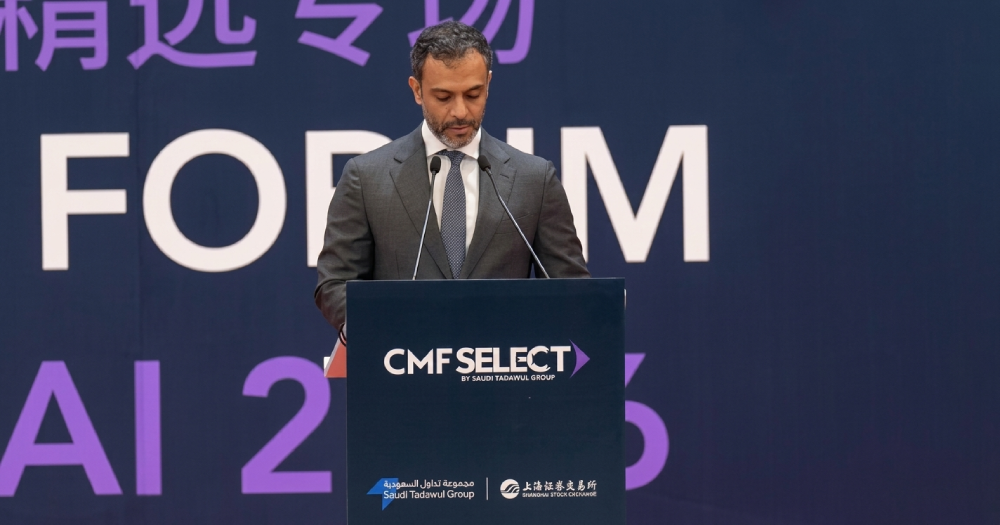
Mohammed Al-Rumaih, CEO of Saudi Tadawul Group, said today, Sept. 3, that the Saudi capital market is seeking to strengthen connectivity with China’s markets across equities and debt, expand financing opportunities, facilitate dual listings, and build a strong financial partnership between the two markets. 
Speaking at the opening of the “Select – Shanghai” 2026 Capital Markets Forum at the Shanghai Stock Exchange, Al-Rumaih said the Saudi capital market has continued to evolve by expanding access for international investors, diversifying available securities, and creating opportunities to strengthen links with Chinese markets.
Saudi Arabia’s Main Market is now directly open to all foreign investors, marking a key milestone in a journey that began with the Qualified Foreign Investor (QFI) framework in 2015, he said.
The Saudi market has significant scale across both the Main Market and Nomu-Parallel Market, with more than 300 listed companies and a combined market capitalization exceeding $2.5 trillion, making it the largest market in the Middle East and one of the world’s largest, he added.
Al-Rumaih said opening the market to foreign investors has provided a simpler and more accessible route for international participation, helping broaden the investor base, boost investment flows and deepen liquidity.
Nayef Al-Athel, General Manager of Sales and Marketing at Saudi Tadawul Group, said the Saudi capital market has undergone an exceptional transformation over the past decade, evolving from a market with around four IPOs a year to one conducting more than 50 public offerings annually.
The market has also moved from the secondary emerging-market classification to emerging-market status, he said.
Saudi Arabia has attracted more than $150 billion in international investments from around the world through the QFI program, Al-Athel said.
The QFI program was abolished in February 2026, allowing investors to access the Saudi market without restrictions and further strengthening the international character of the Saudi capital market.
The partnership between Saudi and Chinese capital markets will create more opportunities for mutual investment, Al-Athel said, noting that around 150 Saudi participants attended the forum to explore financial cooperation opportunities with China.
ETFs could help expand Chinese investors’ access to the Saudi market, he said, expressing hope that the discussions will lead to the listing of Chinese ETFs on the Saudi capital market.
Mohammed Al-Rumaih, CEO of Saudi Tadawul Group
Mohammed Al-Rumaih, CEO of Saudi Tadawul Group, said today, Sept. 3, that the Saudi capital market is seeking to strengthen connectivity with China’s markets across equities and debt, expand financing opportunities, facilitate dual listings, and build a strong financial partnership between the two markets.
Speaking at the opening of the “Select – Shanghai” 2026 Capital Markets Forum at the Shanghai Stock Exchange, Al-Rumaih said the Saudi capital market has continued to evolve by expanding access for international investors, diversifying available securities, and creating opportunities to strengthen links with Chinese markets.
Saudi Arabia’s Main Market is now directly open to all foreign investors, marking a key milestone in a journey that began with the Qualified Foreign Investor (QFI) framework in 2015, he said.
The Saudi market has significant scale across both the Main Market and Nomu-Parallel Market, with more than 300 listed companies and a combined market capitalization exceeding $2.5 trillion, making it the largest market in the Middle East and one of the world’s largest, he added.
Al-Rumaih said opening the market to foreign investors has provided a simpler and more accessible route for international participation, helping broaden the investor base, boost investment flows and deepen liquidity.
Nayef Al-Athel, General Manager of Sales and Marketing at Saudi Tadawul Group, said the Saudi capital market has undergone an exceptional transformation over the past decade, evolving from a market with around four IPOs a year to one conducting more than 50 public offerings annually.
The market has also moved from the secondary emerging-market classification to emerging-market status, he said.
Saudi Arabia has attracted more than $150 billion in international investments from around the world through the QFI program, Al-Athel said.
The QFI program was abolished in February 2026, allowing investors to access the Saudi market without restrictions and further strengthening the international character of the Saudi capital market.
The partnership between Saudi and Chinese capital markets will create more opportunities for mutual investment, Al-Athel said, noting that around 150 Saudi participants attended the forum to explore financial cooperation opportunities with China.
ETFs could help expand Chinese investors’ access to the Saudi market, he said, expressing hope that the discussions will lead to the listing of Chinese ETFs on the Saudi capital market.