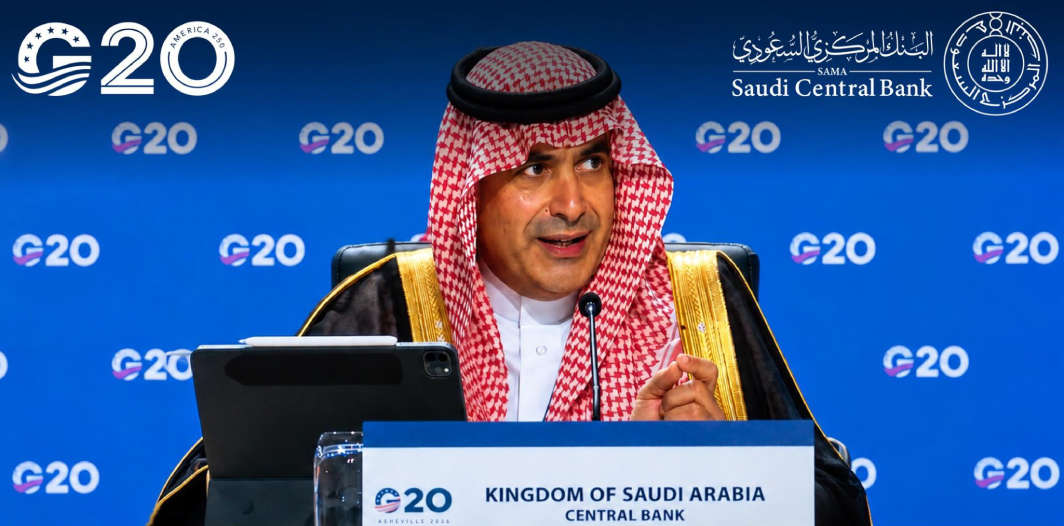
Saudi Central Bank Governor Ayman M. Al-Sayari speaks at the second G20 Finance Ministers and Central Bank Governors Meeting in Asheville, North Carolina
Inflation in Saudi Arabia remains broadly under control, although external developments could affect financial conditions and inflation, said Ayman Al-Sayari, Saudi Central Bank (SAMA) Governor. 
Higher global shipping and insurance costs could exert near-term inflationary pressures, Al-Sayari added on the sidelines of the second G20 Finance Ministers and Central Bank Governors Meeting in Asheville, North Carolina.
The Saudi economy has maintained stable inflation, averaging 1.8% during the first seven months of 2026.
Non-oil activities continued to expand despite growth slowdown in 2026 due to external disruptions, supported by structural reforms, private-sector participation and sustained investment inflows.
Additionally, domestic demand remains a key pillar of growth, underpinned by a stable labor market, government spending and the continued implementation of public- and private-sector projects.
Al-Sayari noted that the overall unemployment rate fell to a record low of 3.1% in Q1 2026, while the unemployment rate among Saudis declined to 6.4%.
He added that short-term risks are largely external, noting that heightened geopolitical uncertainty and disruptions to trade and energy flows have weighed on exports and non-oil activities, while the Kingdom’s diversified logistics infrastructure and energy sources have helped mitigate the impact.
The Kingdom continues to advance its transformation under Saudi Vision 2030 by expanding the private sector’s role, diversifying the economy, boosting investment and supporting sustainable growth.
Saudi Central Bank Governor Ayman M. Al-Sayari speaks at the second G20 Finance Ministers and Central Bank Governors Meeting in Asheville, North Carolina
Inflation in Saudi Arabia remains broadly under control, although external developments could affect financial conditions and inflation, said Ayman Al-Sayari, Saudi Central Bank (SAMA) Governor.
Higher global shipping and insurance costs could exert near-term inflationary pressures, Al-Sayari added on the sidelines of the second G20 Finance Ministers and Central Bank Governors Meeting in Asheville, North Carolina.
The Saudi economy has maintained stable inflation, averaging 1.8% during the first seven months of 2026.
Non-oil activities continued to expand despite growth slowdown in 2026 due to external disruptions, supported by structural reforms, private-sector participation and sustained investment inflows.
Additionally, domestic demand remains a key pillar of growth, underpinned by a stable labor market, government spending and the continued implementation of public- and private-sector projects.
Al-Sayari noted that the overall unemployment rate fell to a record low of 3.1% in Q1 2026, while the unemployment rate among Saudis declined to 6.4%.
He added that short-term risks are largely external, noting that heightened geopolitical uncertainty and disruptions to trade and energy flows have weighed on exports and non-oil activities, while the Kingdom’s diversified logistics infrastructure and energy sources have helped mitigate the impact.
The Kingdom continues to advance its transformation under Saudi Vision 2030 by expanding the private sector’s role, diversifying the economy, boosting investment and supporting sustainable growth.