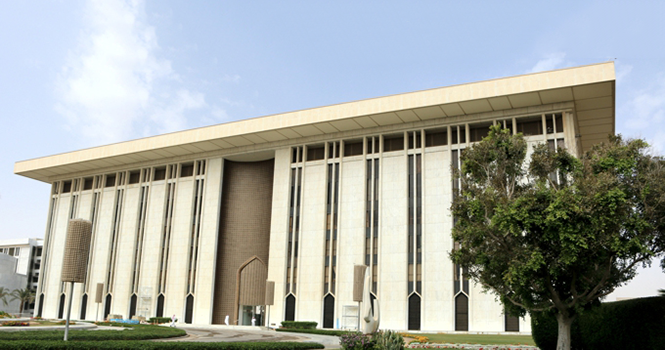
The Saudi Central Bank’s (SAMA) decision to raise the maximum financing limit for buy now, pay later (BNPL) transactions to SAR 10,000 under a circular issued on Dec. 24, 2025, opens a new phase of growth for the sector. The move is expected to increase average transaction values and enable providers to expand further into consumer finance, while also increasing their liquidity and capital requirements and putting greater emphasis on credit risk management.
BNPL allows consumers to purchase goods or services from merchants and pay for them later in predetermined installments without incurring financing costs. 
The new ceiling does not mean all customers will automatically qualify for SAR 10,000. Individual limits will continue to depend on creditworthiness and repayment capacity, in line with responsible lending principles.
The decision marks the latest step in the sector’s regulatory development, which began with its inclusion in the regulatory sandbox in 2020, followed by the regulation of BNPL activity in 2021 and the issuance of rules governing BNPL companies in 2023. Several providers have since moved into the financing licensing phase.
According to estimates by Mordor Intelligence research firm, Saudi Arabia’s BNPL market was valued at around $4.96 billion in 2025 and is forecast to grow to $5.29 billion in 2026 and $7.31 billion by 2031, representing a compound annual growth rate of 6.66% between 2026 and 2031.
Higher average transaction values
Fahad A. Al-Huwaimani, a member of the Saudi Economic Association (SEA) and board member of Masar Al-Nomou Finance, said the higher ceiling is not mandatory for BNPL providers, but could have significant implications for the sector. The amount available to each customer will continue to depend on their creditworthiness, assessed through providers’ internal capabilities, external credit-scoring services and, increasingly, artificial intelligence.
Many international providers set individual limits based on customer creditworthiness rather than applying a uniform ceiling across their user base, drawing on internal and external credit-scoring systems and data analytics.
Al-Huwaimani expects the decision to raise average transaction values in Saudi Arabia and support the expansion of BNPL into higher-ticket categories such as electronics and furniture, as well as other higher-value goods and services.
Such categories previously had relatively limited exposure to BNPL, given lower financing limits and the service’s concentration in smaller consumer purchases.
Higher average transaction values could boost BNPL providers’ revenue through increased transaction volumes and merchant fees, Al-Huwaimani said. However, merchant fee rates could gradually come under pressure as competition intensifies and transaction volumes increase.
Larger investments in AI
Al-Huwaimani expects BNPL providers to step up investment in artificial intelligence and data analytics to improve risk assessment and set more accurate financing limits based on customers’ income and financial obligations.
He said higher transaction volumes and merchant commissions should support revenue growth, although competitive pressures and rising volumes could lead to a modest decline in merchant fee rates.
BNPL providers are also likely to face greater funding requirements, and need to raise additional capital and secure larger financing facilities from third parties.
Moreover, competition in more developed markets has gradually shifted away from simply increasing credit limits toward improving the customer experience, accelerating approval times, reducing merchant fees and developing more innovative financing products.
The Saudi Central Bank’s (SAMA) decision to raise the maximum financing limit for buy now, pay later (BNPL) transactions to SAR 10,000 under a circular issued on Dec. 24, 2025, opens a new phase of growth for the sector. The move is expected to increase average transaction values and enable providers to expand further into consumer finance, while also increasing their liquidity and capital requirements and putting greater emphasis on credit risk management.
BNPL allows consumers to purchase goods or services from merchants and pay for them later in predetermined installments without incurring financing costs.
The new ceiling does not mean all customers will automatically qualify for SAR 10,000. Individual limits will continue to depend on creditworthiness and repayment capacity, in line with responsible lending principles.
The decision marks the latest step in the sector’s regulatory development, which began with its inclusion in the regulatory sandbox in 2020, followed by the regulation of BNPL activity in 2021 and the issuance of rules governing BNPL companies in 2023. Several providers have since moved into the financing licensing phase.
According to estimates by Mordor Intelligence research firm, Saudi Arabia’s BNPL market was valued at around $4.96 billion in 2025 and is forecast to grow to $5.29 billion in 2026 and $7.31 billion by 2031, representing a compound annual growth rate of 6.66% between 2026 and 2031.
Higher average transaction values
Fahad A. Al-Huwaimani, a member of the Saudi Economic Association (SEA) and board member of Masar Al-Nomou Finance, said the higher ceiling is not mandatory for BNPL providers, but could have significant implications for the sector. The amount available to each customer will continue to depend on their creditworthiness, assessed through providers’ internal capabilities, external credit-scoring services and, increasingly, artificial intelligence.
Many international providers set individual limits based on customer creditworthiness rather than applying a uniform ceiling across their user base, drawing on internal and external credit-scoring systems and data analytics.
Al-Huwaimani expects the decision to raise average transaction values in Saudi Arabia and support the expansion of BNPL into higher-ticket categories such as electronics and furniture, as well as other higher-value goods and services.
Such categories previously had relatively limited exposure to BNPL, given lower financing limits and the service’s concentration in smaller consumer purchases.
Higher average transaction values could boost BNPL providers’ revenue through increased transaction volumes and merchant fees, Al-Huwaimani said. However, merchant fee rates could gradually come under pressure as competition intensifies and transaction volumes increase.
Larger investments in AI
Al-Huwaimani expects BNPL providers to step up investment in artificial intelligence and data analytics to improve risk assessment and set more accurate financing limits based on customers’ income and financial obligations.
He said higher transaction volumes and merchant commissions should support revenue growth, although competitive pressures and rising volumes could lead to a modest decline in merchant fee rates.
BNPL providers are also likely to face greater funding requirements, and need to raise additional capital and secure larger financing facilities from third parties.
Moreover, competition in more developed markets has gradually shifted away from simply increasing credit limits toward improving the customer experience, accelerating approval times, reducing merchant fees and developing more innovative financing products.