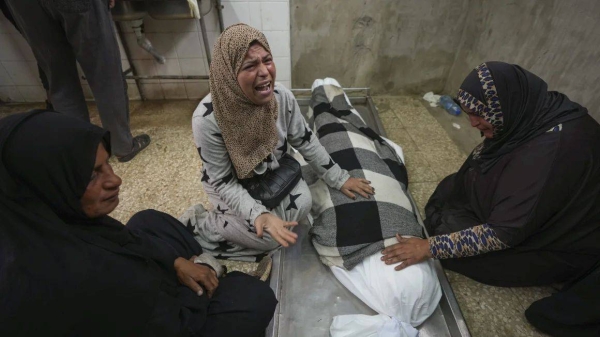
KHARTOUM — The Sudanese army has regained control of a key highway linking Khartoum with the flashpoint city of El-Obeid, which has been under siege by the rival paramilitary Rapid Support Forces (RSF).About half a million people were trapped in the city, where the United Nations has warned of a humanitarian catastrophe, with residents facing intense RSF drone attacks.Capture of Al Sadarat highway, a key military supply route, restores a direct connection between the capital and Kordofan for the first time in months and will help the Sudanese army move troops, weapons, fuel and supplies. It will also block the RSF’s push to seize El-Obeid, the capital of North Kordofan state.The advance has pushed RSF west, away from the North Kordofan state capital they had sought to encircle, and opens a second supply route to El-Obeid and beyond.In a statement on Sunday, the Sudanese army said it had recaptured cities and towns between Khartoum and El-Obeid following two days of fierce battles with the RSF, which controlled the highway.The attacks marked the first major offensive against the paramilitary in months.The army said its troops retook the areas of Um Qurfa and Jarigakh after operations that “inflicted heavy losses in lives and equipment [of RSF fighters], forcing them to flee”.“With this victory, the forces have taken control of the export route of Omdurman El-Obeid”, the army said, referring to the Al Sadarat highway.The RSF had controlled most of the 350km strategic highway since April 2023, when the conflict erupted over disagreements about integrating the paramilitary force into the national army.Losing control of the route will hinder the RSF’s drive to take El-Obeid, a city whose capture would give the paramilitary force control of all of western Sudan.The conflict has killed an estimated 40,000 people, according to the World Health Organization, and forced more than 14 million people to flee their homes.In El-Obeid, UN Women said last week that women and girls “now face an impossible choice over something as basic as a bucket of water: risk a drone strike by collecting it in daylight, or risk rape by waiting until dark”.It added that sexual violence has been used as a weapon throughout Sudan’s three-year war, with testimonies describing rape committed in front of family members alongside brutal physical abuse.
Keep Up to Date with our Weekly Newsletter