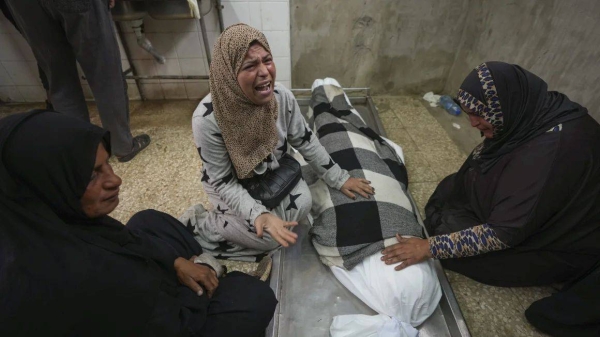
DUBAI — The US military paused attacks on Iran for a second night on Sunday and Tehran said it halted retaliatory attacks against Washington’s allies in the Middle East, as diplomatic efforts have continued to avoid a return to all-out war in the region.The pause in attacks come after top military officials are reported to have advised President Donald Trump to halt bombing Iran as dwindling munitions stockpiles could hamper a sustained military campaign in the region.Iran said on Sunday it would pause what it called “retaliatory” attacks against US allies in the region. “These [US] attacks continued until two nights ago, but over the past two nights the Americans have stopped their attacks,” said the army spokesperson Mohammad Akraminia. “Our strategy has essentially been retaliatory, we have also halted our retaliatory operations.”The US military had carried out strikes on Iran for 13 consecutive nights, in the largest rekindling of the war since an April ceasefire. Friday and Saturday nights passed without bombing.The news website Axios reported on Sunday that Adm Bradley Cooper, the top US military commander in the region, had told Trump the US military campaign had reached the limits of its effectiveness.The message was said to affect Trump’s decision to hold strikes on Iran for the first time in nearly two weeks. Cooper told Trump the US had nearly exhausted the list of targets that it had developed to attack in Iran, and without a return to major combat operations there was little pointin continuing the bombing campaign, Axios reported.Mike Waltz, the US ambassador to the United Nations, said the president was weighing up diplomatic and military options in the nearly five-month-old conflict, with Israeli Prime Minister Benjamin Netanyahu expected to visit the White House on Tuesday. Netanyahu is a vocal critic of Washington’s negotiations with Iranian leaders and has pressed for the US to continue its strikes against Iran. The Israeli leader is under considerable political pressure to show that his military campaigns against Iran and Hezbollah in Lebanon have yielded results before elections scheduled for October.Waltz told “Fox News Sunday” while US forces remained “locked and loaded,” Trump would give negotiations “a little bit of room.”The lull has revived hopes of a return to negotiations, although American media reported the pause could also reflect pressure on US stockpiles of Patriot interceptors and other defensive weapons.Plans to escalate the US campaign have been shelved in part because of shrinking munitions supplies, The New York Times reported, citing two people briefed on the matter.Waltz dismissed this idea, in a second interview with NBC News’ “Meet the Press.”“I want to be crystal clear. The US military — and I’ve verified this every which way — has everything that it needs to conduct this campaign as effectively as it needs to be,” he insisted.Trump also faces the risk of a wider Middle East war, the estrangement of vulnerable Gulf allies and further shocks to the global economy, the Times said.Oil prices fell on Asian markets early Monday as investors breathed cautious sighs of relief at the pause in combat.Fighting over the strategic Strait of Hormuz derailed diplomatic efforts between Washington and Tehran, but the conflict then expanded beyond the vital energy corridor to include attacks on US bases, regional shipping and Gulf allies.Unconfirmed Iranian media reports on Sunday said an oil tanker had been damaged by a sea mine.Tehran in recent days has counterattacked against countries in the region hosting US military forces, killing at least three service members at a base in Jordan and one in Iraq.The 60-day period that began when the interim deal was signed by both countries in mid-June is now well into its second half, and major issues that were meant to be negotiated — notably Iran’s nuclear program at the heart of tensions — remain set aside as mediators try to keep both sides talking.A regional official involved in mediation efforts said diplomacy was underway and that a pause in US and Iranian strikes was a “positive signal that helps their efforts to de-escalate.”The official said both countries want to return to the interim ceasefire deal and that a compromise being negotiated centers Iran allowing vessel transit through the Strait of Hormuz with fewer restrictions. Iran on Sunday said it continued to speak with Oman about managing the safe passage of ships on the Strait of Hormuz, which passes between the countries.Iran’s Foreign Ministry spokesperson Esmail Baghaei said talks had made progress and continued.“Mediators are working and trying to prevent tension from escalating,” Baghaei told a press conference on Sunday.But an Iranian army spokesperson signalled defiance, saying the US had no clear strategy and was “experiencing strategic decision-making fatigue”.Baghaei also said the strait’s status remained unchanged. Tehran has asserted that the interim deal with the US allows it to manage shipping on the waterway for now, and it has objected to US efforts to support a route through the strait that passes close to Oman instead. The strait was considered an international waterway before the war.Concerns continued about shipping on the Strait of Hormuz and another crucial waterway in the region, the Bab El-Mandeb Strait. Iranian-backed Houthi rebels in Yemen last week threatened a blockade of Saudi shipping there.On Sunday locals in Tehran carried on with a normal day, dealing with heavy traffic jams on their way to work, AFP reported.Shops and restaurants were open as usual as the city suffered a heatwave.Trump said on Friday he had not decided whether to return to an all-out operation.“We’re talking to them right now. I think they’re getting more and more serious,” he told journalists.The war that Trump once predicted would last four or five weeks is now nearing its fifth month and weighing on the Republican’s approval ratings ahead of crucial US midterm elections in November.
Keep Up to Date with our Weekly Newsletter