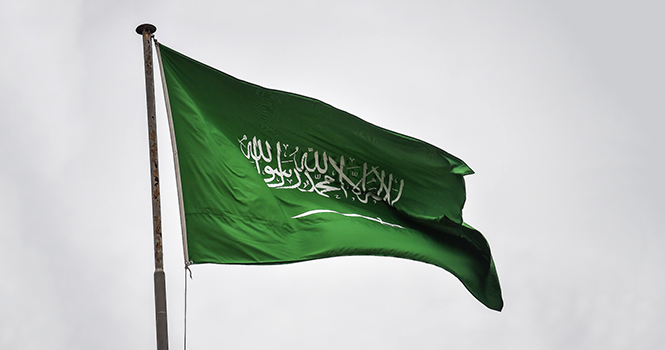
The Kingdom of Saudi Arabia’s flag
The seasonally adjusted Riyad Bank Saudi Arabia Purchasing Managers’ Index (PMI), formerly SP Global Saudi Arabia PMI, rose to 52.8 points in May, up 2.5%, signaling a notable improvement in business conditions. 
Non-oil private-sector companies showed further improvement last month, with the PMI signaling a sharp rise in output, supported by improved domestic demand and stable supply chains.
However, new order growth remained modest amid another steep contraction in exports, whilst business optimism was subdued.
Elevated input costs kept output prices rising sharply, although overall inflationary pressures eased slightly from April.
According to the report, the index remained much weaker than its long-run average of 56.8, as some survey responses indicated that ongoing regional geopolitical tensions had restrained growth.
Non-oil private sector activity expanded at its fastest pace in three months in May, signaling a solid recovery from March’s downturn.
Firms attributed the rebound to normalizing working conditions after earlier conflict-related disruptions, the revival of suspended contracts and stronger domestic demand.
Overall, new orders increased, but the pace of expansion was modest and well below the long-run trend, with improved economic conditions and restarted projects offset by delayed client spending and strong competitive pressures.
External demand also remained weak, as new export orders declined sharply for a third consecutive month, weighed down by shipping disruptions, higher freight and fuel costs, and geopolitical tensions.
Saudi Arabia PMI since 2023*
Month
Index (Points)
Change (Points)
Change (%)
Jan. 2023
58.2
+1.3
+2.3%
February
59.8
+1.6
+2.7%
March
58.7
(1.1)
(1.8%)
April
59.6
+0.9
+1.5%
May
58.5
(1.1)
(1.8%)
June
59.6
+1.1
+1.9%
July
57.7
(1.9)
(3.2%)
August
56.6
(1.1)
(1.9%)
September
57.2
+0.6
+1.1%
October
58.4
+1.2
+2.1%
November
57.5
(0.9)
(1.5%)
December
57.5
—
—
Jan. 2024
55.4
(2.1)
(3.7%)
February
57.2
+1.8
+3.2%
March
57.0
(0.2)
(0.3%)
April
57.0
—
—
May
56.4
(0.6)
(1.1%)
June
55.0
(1.4)
(2.5%)
July
54.4
(0.6)
(1.1%)
August
54.8
+0.4
+0.7%
September
56.3
+1.5
+ .7%
October
56.9
+0.6
+1.1%
November
59.0
+2.1
+3.7%
December
58.4
(0.6)
(1.0%)
January 2025
60.5
+2.1
+3.6%
February
58.4
(2.1)
(3.5%)
March
58.1
(0.3)
(0.5 %)
April
55.6
(2.5)
(4.3 %)
May
55.8
+ 0.2
+ 0.4 %
June
57.2
+ 1.4
+ 2.5 %
July
56.3
(0.9)
(1.6 %)
August
56.4
+ 0.1
(0.2 %)
September
57.8
+ 1.4
+ 2.5 %
October
60.2
+ 2.4
+ 4.2 %
November
58.5
(1.7)
(2.8 %)
December
57.4
(1.1)
(1.9 %)
January 2026
56.3
(1.1)
(1.9 %)
February
56.1
(0.2)
(0.4 %)
March
48.8
(7.3)
(13.0 %)
April
51.5
+ 2.7
+ 5.5 %
May
52.8
+ 1.3
+ 2.5 %
*Change on a monthly basis.
The PMI is a weighted average of the following five indices:
Riyad Bank PMI Details
Sub-index
Percentage (%)
New orders
30%
Production
25%
Employment
20%
Suppliers’ delivery times
15%
Stocks of purchases
10%
Total
100%
The Kingdom of Saudi Arabia’s flag
The seasonally adjusted Riyad Bank Saudi Arabia Purchasing Managers’ Index (PMI), formerly SP Global Saudi Arabia PMI, rose to 52.8 points in May, up 2.5%, signaling a notable improvement in business conditions.
Non-oil private-sector companies showed further improvement last month, with the PMI signaling a sharp rise in output, supported by improved domestic demand and stable supply chains.
However, new order growth remained modest amid another steep contraction in exports, whilst business optimism was subdued.
Elevated input costs kept output prices rising sharply, although overall inflationary pressures eased slightly from April.
According to the report, the index remained much weaker than its long-run average of 56.8, as some survey responses indicated that ongoing regional geopolitical tensions had restrained growth.
Non-oil private sector activity expanded at its fastest pace in three months in May, signaling a solid recovery from March’s downturn.
Firms attributed the rebound to normalizing working conditions after earlier conflict-related disruptions, the revival of suspended contracts and stronger domestic demand.
Overall, new orders increased, but the pace of expansion was modest and well below the long-run trend, with improved economic conditions and restarted projects offset by delayed client spending and strong competitive pressures.
External demand also remained weak, as new export orders declined sharply for a third consecutive month, weighed down by shipping disruptions, higher freight and fuel costs, and geopolitical tensions.
Saudi Arabia PMI since 2023*
Month
Index (Points)
Change (Points)
Change (%)
Jan. 2023
58.2
+1.3
+2.3%
February
59.8
+1.6
+2.7%
March
58.7
(1.1)
(1.8%)
April
59.6
+0.9
+1.5%
May
58.5
(1.1)
(1.8%)
June
59.6
+1.1
+1.9%
July
57.7
(1.9)
(3.2%)
August
56.6
(1.1)
(1.9%)
September
57.2
+0.6
+1.1%
October
58.4
+1.2
+2.1%
November
57.5
(0.9)
(1.5%)
December
57.5
—
—
Jan. 2024
55.4
(2.1)
(3.7%)
February
57.2
+1.8
+3.2%
March
57.0
(0.2)
(0.3%)
April
57.0
—
—
May
56.4
(0.6)
(1.1%)
June
55.0
(1.4)
(2.5%)
July
54.4
(0.6)
(1.1%)
August
54.8
+0.4
+0.7%
September
56.3
+1.5
+ .7%
October
56.9
+0.6
+1.1%
November
59.0
+2.1
+3.7%
December
58.4
(0.6)
(1.0%)
January 2025
60.5
+2.1
+3.6%
February
58.4
(2.1)
(3.5%)
March
58.1
(0.3)
(0.5 %)
April
55.6
(2.5)
(4.3 %)
May
55.8
+ 0.2
+ 0.4 %
June
57.2
+ 1.4
+ 2.5 %
July
56.3
(0.9)
(1.6 %)
August
56.4
+ 0.1
(0.2 %)
September
57.8
+ 1.4
+ 2.5 %
October
60.2
+ 2.4
+ 4.2 %
November
58.5
(1.7)
(2.8 %)
December
57.4
(1.1)
(1.9 %)
January 2026
56.3
(1.1)
(1.9 %)
February
56.1
(0.2)
(0.4 %)
March
48.8
(7.3)
(13.0 %)
April
51.5
+ 2.7
+ 5.5 %
May
52.8
+ 1.3
+ 2.5 %
*Change on a monthly basis.
The PMI is a weighted average of the following five indices:
Riyad Bank PMI Details
Sub-index
Percentage (%)
New orders
30%
Production
25%
Employment
20%
Suppliers’ delivery times
15%
Stocks of purchases
10%
Total
100%