[#content_spinnerchief]
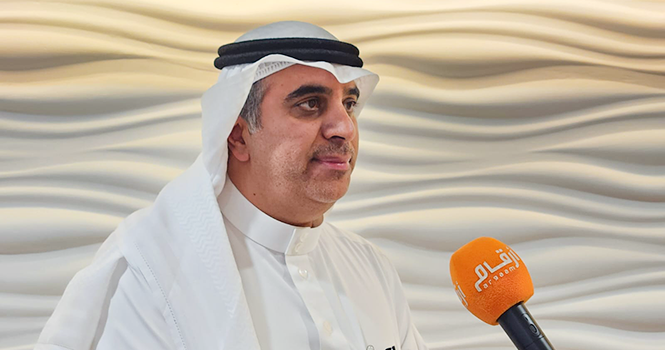
As part of its strategic expansion in the Middle East, iHerb has opened a 323,000-square-foot fulfilment centre in Riyadh, marking a significant shift towards localized operations within the Kingdom of Saudi Arabia. The climate-controlled facility, built in partnership with CJ Logistics, is designed to accelerate delivery times across the Kingdom and the wider MENA region.In this interview, Michael D. Cody, Chief Financial Officer of iHerb, discusses the financial rationale behind the investment, the strategic importance of Saudi Arabia within iHerb’s global footprint, and how localization, logistics partnerships, and consumer trust underpin the company’s long-term growth ambitions in the region.Rather than continuing cross-border, iHerb chose to build a fulfilment infrastructure in Saudi Arabia. What are the financial and strategic considerations in this decision? What makes it an apt long-term investment? The Middle East and the GCC region are very important for our business. It’s collectively one of the biggest regions that we sell to. The volume has dictated that it makes sense for us to be local. Being local allows us to make, hopefully, customers happy. We have confirmed that the deliveries are arriving in 1 to 2 days, versus what used to be 5 to 7, working exactly as planned. It feeds into our growth and long-term strategy of being closer to our customers, helping them with a better experience. It allows us to figure out what they want and tailor our product assortment more to the region. With a reliable partner like CJ Logistics, a 3PL provider, they build the facility, and we provide the inventory. It’s an operational fit.Global e-commerce is about speed. How does having an inventory close to customers in Saudi Arabia change your logistics approach– delivery times, customer experience and scalability?The delivery times have been cut in half. In Riyadh, which represents almost a third of the country’s population, and subsequently, a significant portion of our business, we can get the fastest possible delivery. This means potentially even the same day as we get better at this. It can be 1 to 2 days, and then 2 to 3 days for the MENA region. It is a significant improvement in customer experience. It also leads to efficient shipping, allowing us to ship larger consignments to the fulfilment center, rather than distributing directly from the U.S. It is better for the cost ecosystem. Ahead of the peak wellness demand in the region, what market signals or trends make you confident about iHerb’s trajectory in the Kingdom? How do you balance long-term strategy and near-term operational efficiency? Wellness as a trend is growing around the world, and it’s here just as much. The Kingdom’s population is quite young, leading to greater focus on wellness and the awareness around it. The influencer-driven economy lends itself well to wellness. For the long-term and near-term strategy, we hope we’re early on the trend, and there’s a lot of growth ahead. We already had a nice sales base here. It creates a better operating model. In a category where trust, quality, and authenticity are non-negotiable, how does iHerb ensure rapid delivery without compromising product integrity? What does this fulfilment centre reveal about your blueprint for scaling globally while operating locally? Trust is our biggest value proposition across everything we do. Other marketplaces run on third-party sellers. There’s no authentic guarantee. With us, we buy directly from the manufacturer. Step 1 is an authentic product. Next is that we take care of it very well. For example, a probiotic could be authentic, but in the heat, it is no good. It effectively becomes just a powder pill. Keeping the center climate-controlled is important, and we will do it all the way to your home, if we can. We do expiration dates as well. So you, as a customer, can take it and feel good about it. It’s our customer proposition. Makes iHerb a better choice. How does leveraging the partnership with CJ Logistics support operational excellence while maintaining financial discipline?CJ Logistics has been our 3PL partner since our first international fulfilment centre in South Korea. They’re a large global company, and we operate on good experience and trust. If there is an issue, we are open and honest about it, helping us work through it. That’s something we value as partners, and it goes both ways. Financially, they have the resources to build better warehouses and put the robotics in. We have nine warehouses around the world, and they have hundreds. They have the ability to leverage that kind of skill and scale. Marry that with our strength in products, and it’s a perfect match. How does the Riyadh fulfilment centre reinforce Saudi Arabia’s role as a regional logistics hub for both local and the wider MENA market?Since we are early into that zone, we have to work through the issues that come along with it. It took longer than expected, but we’re in a really good spot now. It creates momentum for more companies to establish in the zone. That region keeps getting stronger. As the companies move in, it’s will allow Saudi Arabia to become much more of a logistics hub for the region, and potentially even globally. We like to be at the forefront of that. If things work out, we’ll be opening more buildings here. How does iHerb see this investment reflecting the Kingdom’s long-term strategic Vision 2030 and its potential for global e-commerce?We were among the early companies to invest in the Kingdom as a viable logistics hub, and now we see others build around us. Vision 2030 is focused on attracting continued investments to the Kingdom. We’re happy to partner and have valuable customers here. The Kingdom has been very open and welcoming, driving us to this point. We are contributors, and others will follow suit as well. On that note, would you also have more products that are made locally on your website? That’s probably the next evolution. We call it regional procurement– looking at local products that are more relevant to the region. We roughly have 50,000 products, and not all of those work in every country. We want to find a more tailored product selection that will be more relevant, not only to the Kingdom, but also to the whole region. It will allow us to grow faster and also, again, contribute to Vision 2030. It will help everybody else understand what’s possible here.