Logo ofDar Al Balad Business Solutions
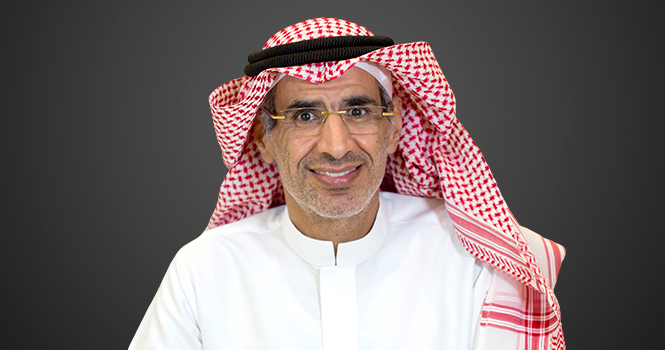
Dar Al Balad Business Solutions,said the company delivered a compound annual growth rate (CAGR) of around 26% in revenue between 2022 and 2025, said Chairman Abdullah AlJuraish. 
In an interview withArgaam, AlJuraish said the company’s gross margin was steady at about 20% over the same period, supported by project mix, pricing, and execution speed across its business lines.
Following regulatory approval to list on the main market, Dar Al Balad is working to strengthen corporate governance, enhance brand credibility, and build strategic financing flexibility.
AlJuraish said the company is a leading provider of managed IT services, IT consulting services, business managed services, and Internet of Things (IoT) solutions. Through its subsidiary GSC Solutions, the company also offers industrial services including Industrial Reclamation , maintenance, and supply.
Dar Al Balad stands out in the Saudi market by combining long-standing experience with cost-efficient, competitive offerings.
Here’s the full interview:
Q: Can you give us an insight about Dar Al Balad?
A:Dar Al Balad is a Saudi provider of integrated business solutions, including managed IT services, IT consulting services, Business managed services , and IoT solutions. Through its subsidiary GSC Solutions, the company also offers industrial services such as industrial reclamation , industrial maintenance, and supply services.
Q: What is the rationale behind the IPO now?
A:The IPO aims to strengthen corporate governance as a listed entity, enhance brand credibility and positioning for large tenders, and create a listed equity platform that provides long-term financing flexibility.
Q: How has the company’s top line evolved in recent years?
A:Total revenue increased from SAR 157.9 million in 2022 to SAR 195.5 million in 2023, rising further to SAR 243.3 million in 2024 and SAR 315.5 million in 2025, implying a CAGR of around 26% over 2022–2025.
Q: What was the revenue mix in 2025?
A:Business solutions – comprising managed IT services, IT consulting services, and Business managed services —was the main contributor, accounting for about 93.4% of 2025 revenue. Industrial solutions (Industrial Reclamation and industrial maintenance services)
contributed around 5.4%, while specialized solutions (industrial supply and IoT) made up roughly 1.2%.
Q: Which business solutions lines drove revenue, and how did gross margin perform?
The question really helps highlight market trends. Within business solutions, IT managed services were the largest revenue contributor, posting a CAGR of around 29.1% over 2022–2025. IT consulting followed, with a CAGR of about 21.0%, while managed business services grew at a CAGR of roughly 11.2% over the same period.
2025 also included an initial contribution from new industrial service lines following the acquisition of GSC Solutions.
In terms of revenue mix for 2025, managed IT services accounted for 47.4%, IT consulting services for 33.3%, and business managed services for 12.7%. Their respective contributions to gross profit were 40.5%, 29.5%, and 13.1%.
Overall gross margin remained broadly unchanged at around 20% over 2022–2025 (19.8%–21.1%–18.8%–20%), supported by project mix, pricing, and execution speed across business lines.
Q: What types of contracts does the company typically sign, and what about their terms?
A:The company signs short-term contracts (6–12 months), which are renewable. It also enters into medium- to long-term framework agreements (2–5 years), executed through defined scopes of work.
In addition, competitive contracts typically span 1–3 years and are awarded through tenders and RFPs, without automatic renewal.
Q: How about revenue concentration by client?
A:The top 10 clients accounted for around 64% of 2025 revenue, with the remainder generated from other channels. Historically, the top 10 clients contribution has remained broadly stable at 64–73% over 2022–2025.
The top three clients represented about 36% of 2025 revenue, with the balance generated by the remaining seven clients within the top 10.
The company maintains long-standing client relationships, including four clients with relationships exceeding 15 years, and two others spanning 10–14 years.
By sector, financial services sector clients accounted for 56.6% of the top 10 clients, followed by IT sector clients (18.7%) and insurance sector clients (13.1%).
Q: What are the company’s key competitive strengths?
A:Dar Al Balad deploys an integrated business model as a full-service solutions provider, enhancing operational efficiency, reducing complexity, and delivering greater value to clients.
The company offers a comprehensive portfolio spanning managed IT services , IT consulting services, [MA1], Business managed services , and IoT solutions. The acquisition of GSC Solutions has diversified the portfolio to include industrial services, supporting its transition into a fully integrated solutions platform.
It also focuses on delivering strong value at competitive cost levels through operational efficiency.
In addition, long-term client relationships enable proactive support and high operational flexibility. The company holds ISO certifications for quality (ISO 9001), environmental management (ISO 14001), and occupational health and safety (ISO 45001), and is classified as a first-grade contractor—underscoring its adherence to international standards and reinforcing its competitive positioning.
Q: How do you assess the level of competition in your sectors today?
A:As you know, it is not easy to enter a market where the company has built a track record spanning more than 20 years. Deep expertise is a key barrier to entry.
There are also regulatory and classification hurdles, in addition to long-standing, trust-based relationships with corporates and regulators. Specialized know-how in areas such as Industrial Reclamation and industrial maintenance, as well as the ability to consistently deliver complex, long-term projects, further reinforce these barriers.
Q: What are your expectations for IT services growth in Saudi Arabia?
A:Based on market studies, the overall IT services market in Saudi Arabia is expected to grow at a CAGR of around 11% over 2025–2029. Over the same period, managed IT services are projected to grow by about 8%, IT consulting by 6%, managed business services by 6%, and IoT solutions by around 12%.
Q: Which activities and services are expected to drive growth going forward?
A:We operate in a sector closely aligned with Vision 2030 drivers. Key growth catalysts include digital government services, outsourcing programs aimed at improving operational efficiency, national data and AI infrastructure initiatives, and industrial sustainability and localization programs. These trends are all driving demand for IT, IoT, and industrial efficiency solutions.
Our strategy focuses on capturing opportunities in managed services, as clients upgrade infrastructure and cybersecurity. We are also expanding in consulting, particularly in digital transformation, ERP, banking, and data platforms. In addition, we aim to grow managed business services as government entities and corporates increasingly outsource non-core functions. We are also diversifying our portfolio to include advanced cybersecurity and AI-driven solutions.
Q: What are your expansion plans. Are acquisitions on the radar post-listing?
A:We aim to build on our presence in Bahrain and Qatar to expand across the GCC and the wider Middle East, addressing growing regional demand for IT, IoT, and industrial solutions.
There are currently no announced acquisition deals, but we continue to evaluate acquisition opportunities that align with our strategy and add operational value.
In this context, Dar Al Balad is undergoing a major strategic transformation focused on enhancing its market value ahead of the IPO. The company is preparing for a listing on TASI, having received Capital Market Authority approval on Dec. 31, 2025, to offer 21 million shares, representing 30% of its capital, on the main market.
Logo ofDar Al Balad Business Solutions
Dar Al Balad Business Solutions,said the company delivered a compound annual growth rate (CAGR) of around 26% in revenue between 2022 and 2025, said Chairman Abdullah AlJuraish.
In an interview withArgaam, AlJuraish said the company’s gross margin was steady at about 20% over the same period, supported by project mix, pricing, and execution speed across its business lines.
Following regulatory approval to list on the main market, Dar Al Balad is working to strengthen corporate governance, enhance brand credibility, and build strategic financing flexibility.
AlJuraish said the company is a leading provider of managed IT services, IT consulting services, business managed services, and Internet of Things (IoT) solutions. Through its subsidiary GSC Solutions, the company also offers industrial services including Industrial Reclamation , maintenance, and supply.
Dar Al Balad stands out in the Saudi market by combining long-standing experience with cost-efficient, competitive offerings.
Here’s the full interview:
Q: Can you give us an insight about Dar Al Balad?
A:Dar Al Balad is a Saudi provider of integrated business solutions, including managed IT services, IT consulting services, Business managed services , and IoT solutions. Through its subsidiary GSC Solutions, the company also offers industrial services such as industrial reclamation , industrial maintenance, and supply services.
Q: What is the rationale behind the IPO now?
A:The IPO aims to strengthen corporate governance as a listed entity, enhance brand credibility and positioning for large tenders, and create a listed equity platform that provides long-term financing flexibility.
Q: How has the company’s top line evolved in recent years?
A:Total revenue increased from SAR 157.9 million in 2022 to SAR 195.5 million in 2023, rising further to SAR 243.3 million in 2024 and SAR 315.5 million in 2025, implying a CAGR of around 26% over 2022–2025.
Q: What was the revenue mix in 2025?
A:Business solutions – comprising managed IT services, IT consulting services, and Business managed services —was the main contributor, accounting for about 93.4% of 2025 revenue. Industrial solutions (Industrial Reclamation and industrial maintenance services)
contributed around 5.4%, while specialized solutions (industrial supply and IoT) made up roughly 1.2%.
Q: Which business solutions lines drove revenue, and how did gross margin perform?
The question really helps highlight market trends. Within business solutions, IT managed services were the largest revenue contributor, posting a CAGR of around 29.1% over 2022–2025. IT consulting followed, with a CAGR of about 21.0%, while managed business services grew at a CAGR of roughly 11.2% over the same period.
2025 also included an initial contribution from new industrial service lines following the acquisition of GSC Solutions.
In terms of revenue mix for 2025, managed IT services accounted for 47.4%, IT consulting services for 33.3%, and business managed services for 12.7%. Their respective contributions to gross profit were 40.5%, 29.5%, and 13.1%.
Overall gross margin remained broadly unchanged at around 20% over 2022–2025 (19.8%–21.1%–18.8%–20%), supported by project mix, pricing, and execution speed across business lines.
Q: What types of contracts does the company typically sign, and what about their terms?
A:The company signs short-term contracts (6–12 months), which are renewable. It also enters into medium- to long-term framework agreements (2–5 years), executed through defined scopes of work.
In addition, competitive contracts typically span 1–3 years and are awarded through tenders and RFPs, without automatic renewal.
Q: How about revenue concentration by client?
A:The top 10 clients accounted for around 64% of 2025 revenue, with the remainder generated from other channels. Historically, the top 10 clients contribution has remained broadly stable at 64–73% over 2022–2025.
The top three clients represented about 36% of 2025 revenue, with the balance generated by the remaining seven clients within the top 10.
The company maintains long-standing client relationships, including four clients with relationships exceeding 15 years, and two others spanning 10–14 years.
By sector, financial services sector clients accounted for 56.6% of the top 10 clients, followed by IT sector clients (18.7%) and insurance sector clients (13.1%).
Q: What are the company’s key competitive strengths?
A:Dar Al Balad deploys an integrated business model as a full-service solutions provider, enhancing operational efficiency, reducing complexity, and delivering greater value to clients.
The company offers a comprehensive portfolio spanning managed IT services , IT consulting services, [MA1], Business managed services , and IoT solutions. The acquisition of GSC Solutions has diversified the portfolio to include industrial services, supporting its transition into a fully integrated solutions platform.
It also focuses on delivering strong value at competitive cost levels through operational efficiency.
In addition, long-term client relationships enable proactive support and high operational flexibility. The company holds ISO certifications for quality (ISO 9001), environmental management (ISO 14001), and occupational health and safety (ISO 45001), and is classified as a first-grade contractor—underscoring its adherence to international standards and reinforcing its competitive positioning.
Q: How do you assess the level of competition in your sectors today?
A:As you know, it is not easy to enter a market where the company has built a track record spanning more than 20 years. Deep expertise is a key barrier to entry.
There are also regulatory and classification hurdles, in addition to long-standing, trust-based relationships with corporates and regulators. Specialized know-how in areas such as Industrial Reclamation and industrial maintenance, as well as the ability to consistently deliver complex, long-term projects, further reinforce these barriers.
Q: What are your expectations for IT services growth in Saudi Arabia?
A:Based on market studies, the overall IT services market in Saudi Arabia is expected to grow at a CAGR of around 11% over 2025–2029. Over the same period, managed IT services are projected to grow by about 8%, IT consulting by 6%, managed business services by 6%, and IoT solutions by around 12%.
Q: Which activities and services are expected to drive growth going forward?
A:We operate in a sector closely aligned with Vision 2030 drivers. Key growth catalysts include digital government services, outsourcing programs aimed at improving operational efficiency, national data and AI infrastructure initiatives, and industrial sustainability and localization programs. These trends are all driving demand for IT, IoT, and industrial efficiency solutions.
Our strategy focuses on capturing opportunities in managed services, as clients upgrade infrastructure and cybersecurity. We are also expanding in consulting, particularly in digital transformation, ERP, banking, and data platforms. In addition, we aim to grow managed business services as government entities and corporates increasingly outsource non-core functions. We are also diversifying our portfolio to include advanced cybersecurity and AI-driven solutions.
Q: What are your expansion plans. Are acquisitions on the radar post-listing?
A:We aim to build on our presence in Bahrain and Qatar to expand across the GCC and the wider Middle East, addressing growing regional demand for IT, IoT, and industrial solutions.
There are currently no announced acquisition deals, but we continue to evaluate acquisition opportunities that align with our strategy and add operational value.
In this context, Dar Al Balad is undergoing a major strategic transformation focused on enhancing its market value ahead of the IPO. The company is preparing for a listing on TASI, having received Capital Market Authority approval on Dec. 31, 2025, to offer 21 million shares, representing 30% of its capital, on the main market.