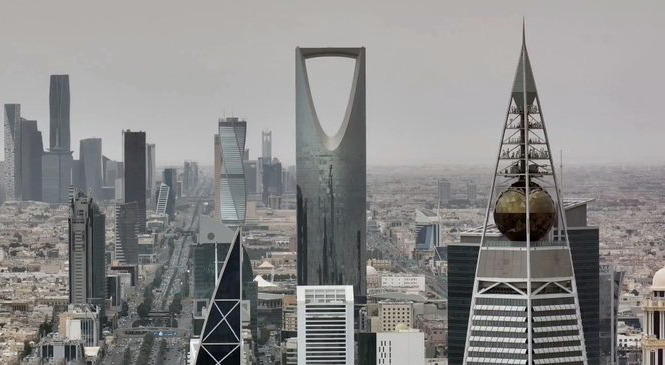
Riyadh City
International demand for Saudi Arabia’s real estate market is estimated at around $6.3 billion, despite a widening gap between property prices and investor expectations, raising concerns over a potential oversupply in the luxury segment, Faisal Durrani, Head of Research for the Middle East at Knight Frank, told Argaam. 
Strong international demand worth $6.3 bln
A survey of 1,550 individuals worldwide—around half of whom are residents of Saudi Arabia and the UAE—showed that 63% are interested in purchasing residential property in the Kingdom, while 25% plan to buy within the current year, Durrani added.
Survey participants collectively own about 3,947 properties globally, with a combined net worth of $1.16 billion (excluding primary residences), indicating a financially strong investor base.
The sample reflects demographic diversity, with 45% Muslims and 55% non-Muslims, spanning a range of income brackets across countries including Algeria, Egypt, India, Malaysia, the UK, and the US.
Residents drive demand
Demand is significantly stronger among residents, at 85%, compared to 40%–49% among international investors outside the region, mainly due to information gaps, trust issues, and relatively new regulatory frameworks.
Egyptians and Algerians show highest interest
Egyptians and Algerians rank as the most interested nationalities in property ownership, with interest levels reaching up to 90%, driven by cultural and religious ties and greater familiarity with the market.
Residential sector remains top choice
The residential sector continues to be the preferred investment segment, followed by retail and FB, then branded residences and hospitality—supported by a young demographic profile and the expansion of lifestyle developments.
Preference for villas deepens pricing gap
About 69% of investors prefer villas or townhouses, with budgets of up to $1 million, targeting properties with four to six bedrooms—further widening the gap between current prices and buyer expectations.
Branded residences dominate investment share
Durrani noted that the $6.3 billion in potential investments is distributed as follows: approximately $1.5 billion for residential real estate, $3.5 billion for branded residences, and the remainder for mega projects.
Around 77% of respondents expressed interest in branded residences, with 70% intending personal use.
According to Knight Frank, the branded residences market in Saudi Arabia remains at an early stage, with around 1,685 units currently available and more than 1,900 units under development, reflecting rapid expansion in this segment.
Demand spans different wealth segments, with around 80% of individuals with net worth below $500,000 and 84% of those exceeding $3 million expressing interest in branded residences—highlighting broad market potential.
Survey results show that 44% of investors have budgets not exceeding $1 million, while about 6% are willing to spend over $20 million. The highest demand originates from Egypt (20%) and Algeria (10%).
Additionally, around 27% of individuals with net worth above $3 million are willing to spend more than $20 million on branded homes.
Riyadh leads; Makkah and Madinah attract Muslim investors
In terms of preferred destinations, Riyadh ranks first, followed by Jeddah, while Makkah and Madinah hold strong appeal among Muslim investors.
Demand for Madinah stands at 63%, compared to 59% for Makkah. Interest in Madinah is driven by investors from the UK and Malaysia, while Makkah attracts investors from India and Algeria, in addition to high-income buyers seeking investment opportunities.
Makkah is the top destination for buyers from India (56%) and Algeria (45%), while Madinah records the highest interest among investors from the UK (59%) and Malaysia (58%), according to the survey.
Market awareness and regulations impact demand
The report noted that international demand is influenced by factors such as market awareness and the ability to physically inspect properties, with many investors preferring on-ground experience before committing—particularly in newer markets.
It added that the relatively recent regulatory framework governing foreign ownership may contribute to hesitation among some international investors, although demand is expected to rise gradually as regulations become clearer and market awareness improves.
Saudi real estate market outlook
Durrani said the residential market has started to show signs of slowdown, particularly in Riyadh, where transaction volumes declined by 55% and values fell by 48% over the past year, due to affordability challenges.
Apartment prices have risen by around 100% since 2019, while villa prices increased by about 55%, compared to limited income growth. Rents have also increased by 30%–40%, reaching up to 70% in some areas of Riyadh, constraining household savings.
He added that measures such as rent caps and increasing white land fees to a maximum of 10% have prompted some developers to delay land acquisitions, while some households are opting to purchase land and build their own homes.
Homeownership in Saudi Arabia is approaching its 70% target (currently around 66%–67%), while the Kingdom needs approximately 830,000 housing units by 2034, underscoring strong long-term demand.
Riyadh City
International demand for Saudi Arabia’s real estate market is estimated at around $6.3 billion, despite a widening gap between property prices and investor expectations, raising concerns over a potential oversupply in the luxury segment, Faisal Durrani, Head of Research for the Middle East at Knight Frank, told Argaam.
Strong international demand worth $6.3 bln
A survey of 1,550 individuals worldwide—around half of whom are residents of Saudi Arabia and the UAE—showed that 63% are interested in purchasing residential property in the Kingdom, while 25% plan to buy within the current year, Durrani added.
Survey participants collectively own about 3,947 properties globally, with a combined net worth of $1.16 billion (excluding primary residences), indicating a financially strong investor base.
The sample reflects demographic diversity, with 45% Muslims and 55% non-Muslims, spanning a range of income brackets across countries including Algeria, Egypt, India, Malaysia, the UK, and the US.
Residents drive demand
Demand is significantly stronger among residents, at 85%, compared to 40%–49% among international investors outside the region, mainly due to information gaps, trust issues, and relatively new regulatory frameworks.
Egyptians and Algerians show highest interest
Egyptians and Algerians rank as the most interested nationalities in property ownership, with interest levels reaching up to 90%, driven by cultural and religious ties and greater familiarity with the market.
Residential sector remains top choice
The residential sector continues to be the preferred investment segment, followed by retail and FB, then branded residences and hospitality—supported by a young demographic profile and the expansion of lifestyle developments.
Preference for villas deepens pricing gap
About 69% of investors prefer villas or townhouses, with budgets of up to $1 million, targeting properties with four to six bedrooms—further widening the gap between current prices and buyer expectations.
Branded residences dominate investment share
Durrani noted that the $6.3 billion in potential investments is distributed as follows: approximately $1.5 billion for residential real estate, $3.5 billion for branded residences, and the remainder for mega projects.
Around 77% of respondents expressed interest in branded residences, with 70% intending personal use.
According to Knight Frank, the branded residences market in Saudi Arabia remains at an early stage, with around 1,685 units currently available and more than 1,900 units under development, reflecting rapid expansion in this segment.
Demand spans different wealth segments, with around 80% of individuals with net worth below $500,000 and 84% of those exceeding $3 million expressing interest in branded residences—highlighting broad market potential.
Survey results show that 44% of investors have budgets not exceeding $1 million, while about 6% are willing to spend over $20 million. The highest demand originates from Egypt (20%) and Algeria (10%).
Additionally, around 27% of individuals with net worth above $3 million are willing to spend more than $20 million on branded homes.
Riyadh leads; Makkah and Madinah attract Muslim investors
In terms of preferred destinations, Riyadh ranks first, followed by Jeddah, while Makkah and Madinah hold strong appeal among Muslim investors.
Demand for Madinah stands at 63%, compared to 59% for Makkah. Interest in Madinah is driven by investors from the UK and Malaysia, while Makkah attracts investors from India and Algeria, in addition to high-income buyers seeking investment opportunities.
Makkah is the top destination for buyers from India (56%) and Algeria (45%), while Madinah records the highest interest among investors from the UK (59%) and Malaysia (58%), according to the survey.
Market awareness and regulations impact demand
The report noted that international demand is influenced by factors such as market awareness and the ability to physically inspect properties, with many investors preferring on-ground experience before committing—particularly in newer markets.
It added that the relatively recent regulatory framework governing foreign ownership may contribute to hesitation among some international investors, although demand is expected to rise gradually as regulations become clearer and market awareness improves.
Saudi real estate market outlook
Durrani said the residential market has started to show signs of slowdown, particularly in Riyadh, where transaction volumes declined by 55% and values fell by 48% over the past year, due to affordability challenges.
Apartment prices have risen by around 100% since 2019, while villa prices increased by about 55%, compared to limited income growth. Rents have also increased by 30%–40%, reaching up to 70% in some areas of Riyadh, constraining household savings.
He added that measures such as rent caps and increasing white land fees to a maximum of 10% have prompted some developers to delay land acquisitions, while some households are opting to purchase land and build their own homes.
Homeownership in Saudi Arabia is approaching its 70% target (currently around 66%–67%), while the Kingdom needs approximately 830,000 housing units by 2034, underscoring strong long-term demand.