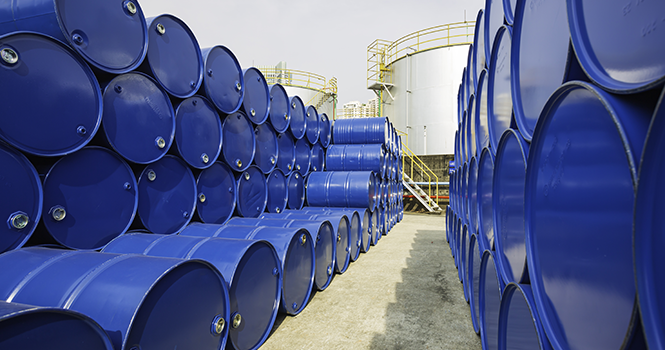
Oil barrels
The International Energy Agency (IEA) said Gulf countries cut their combined oil output by at least 10 million barrels per day (bpd), warning that supply losses could worsen if shippingas usualdoes not resume quickly. 
In a report, the agency said the Middle East war is causing the largest disruption to oil supplies in the history of the global oil market.
Flowsof crude and refined products through the Strait of Hormuz have dropped from about 20 millionbpdbefore the war to minimal levels currently. With limited capacity to bypass the key waterway and storage tanks filling up, Gulf producers reduced output.
The IEA expects global oil supply to fall byeightmillion bpd in March, with the drop in Middle East output partly offset by higher production from non-OPEC+ countries, including Kazakhstan and Russia.
While losses will depend on the duration of the conflict and disruptions to flows, the agency forecasts global oil supply to grow by 1.1 million bpd in 2026, entirely driven by non-OPEC+ producers.
The agency also said widespread flight cancellations in the Middle East and major disruptions to liquefied petroleum gas supplies are expected to cut global oil demand by aboutonemillionbpdin March and April compared with earlier estimates.
Higher oil prices and uncertain global economic prospects pose additional risks to the outlook. Global oil consumption is now projected to rise by 640,000 bpd year-on-year (YoY) in 2026, down by 210,000bpdfrom last month’s forecast.
According to data available to Argaam, the IEA recently agreed to release 400 million barrels from emergency reserves to address supply disruptions caused by the Middle East war, marking the largest stock draw in the agency’s history.
Oil barrels
The International Energy Agency (IEA) said Gulf countries cut their combined oil output by at least 10 million barrels per day (bpd), warning that supply losses could worsen if shippingas usualdoes not resume quickly.
In a report, the agency said the Middle East war is causing the largest disruption to oil supplies in the history of the global oil market.
Flowsof crude and refined products through the Strait of Hormuz have dropped from about 20 millionbpdbefore the war to minimal levels currently. With limited capacity to bypass the key waterway and storage tanks filling up, Gulf producers reduced output.
The IEA expects global oil supply to fall byeightmillion bpd in March, with the drop in Middle East output partly offset by higher production from non-OPEC+ countries, including Kazakhstan and Russia.
While losses will depend on the duration of the conflict and disruptions to flows, the agency forecasts global oil supply to grow by 1.1 million bpd in 2026, entirely driven by non-OPEC+ producers.
The agency also said widespread flight cancellations in the Middle East and major disruptions to liquefied petroleum gas supplies are expected to cut global oil demand by aboutonemillionbpdin March and April compared with earlier estimates.
Higher oil prices and uncertain global economic prospects pose additional risks to the outlook. Global oil consumption is now projected to rise by 640,000 bpd year-on-year (YoY) in 2026, down by 210,000bpdfrom last month’s forecast.
According to data available to Argaam, the IEA recently agreed to release 400 million barrels from emergency reserves to address supply disruptions caused by the Middle East war, marking the largest stock draw in the agency’s history.