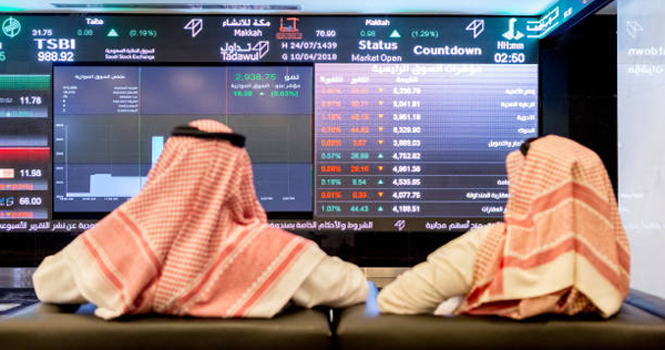
Tadawul trading screen
There is currently a debate about the impact of short selling on the performance of the Saudi Exchange (Tadawul), as it is seen as one of the reasons that led to the decline in the main index (TASI), in addition to the geopolitical situation. 
However, actual data indicates that this mechanism does not constitute a significant factor in TASI movement, especially when compared to the size of the market and the liquidity traded, and to the levels of its use in global financial markets, particularly the US market.
First, it should be clarified that short selling in Saudi Arabia is carried out through a securities lending and borrowing system in Tadawul, under the supervision of the Capital Market Authority (CMA). The regulations impose a maximum limit on net short positions of approximately 10% of the company’s free-float shares. However, the actual use of this mechanism remains very low.
Additionally, short selling can only take place after borrowing the securities to be sold, and there is also an uptick rule, which is a price protection mechanism that limits the impact of short selling on the prices of listed securities.
Tadawul trading screen
There is currently a debate about the impact of short selling on the performance of the Saudi Exchange (Tadawul), as it is seen as one of the reasons that led to the decline in the main index (TASI), in addition to the geopolitical situation.
However, actual data indicates that this mechanism does not constitute a significant factor in TASI movement, especially when compared to the size of the market and the liquidity traded, and to the levels of its use in global financial markets, particularly the US market.
First, it should be clarified that short selling in Saudi Arabia is carried out through a securities lending and borrowing system in Tadawul, under the supervision of the Capital Market Authority (CMA). The regulations impose a maximum limit on net short positions of approximately 10% of the company’s free-float shares. However, the actual use of this mechanism remains very low.
Additionally, short selling can only take place after borrowing the securities to be sold, and there is also an uptick rule, which is a price protection mechanism that limits the impact of short selling on the prices of listed securities.