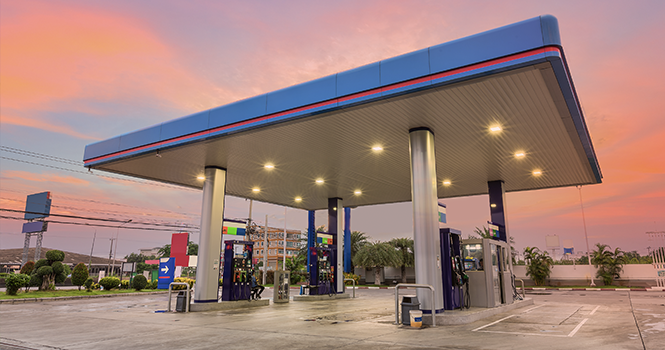
The fuel stations market in Saudi Arabia is witnessing a notable shift in its market share structure, as the share of major companies continues to rise at the expense of individual investors, amid the expansion of organized companies and acquisition activity.
By the end of Q4 2025, the market share of the main companies in the fuel stations market reached about 32.3% of the total number of stations in the Kingdom, according to Aldrees Petroleum and Transport Services Co. (Aldrees) report, with these companies collectively operating 2,456 fuel stations.
Aldrees leads the market with a 17.1% share of total stations across the Kingdom, followed by Saudi Automotive Services Co. (SASCO) (8.59%), J-Oil (2.32%), Mazaya Fuel (2.27%), and Aramco (2.03%).
This expansion is supported by acquisitions and growth in station networks, as Saudi Aramco acquired Sahel Fuel to strengthen its presence in the retail and distribution segment, while SASCO acquired Naft Services Co. as part of its strategy to expand its network and station count.
Market shares of Saudi fuel station companies
Company
Q3 2025
Q4 2025
Aldrees
16.20%
17.10%
SASCO
8.29%
8.59%
J-Oil
2.30%
2.32%
Mazaya
2.17%
2.27%
Aramco
1.97%
2.03%
Other companies
24.93%
23.83%
Individual investors
44.13%
43.86%
Total
100%
100%
According to the report, the number of Aldrees stations increased by about 69 stations as of December 2025, while the number of SASCO stations rose by 23 stations.
In contrast, the number of stations owned by individual investors declined by about 21 stations, bringing the total number of fuel stations in the Kingdom to 7,600 stations.
Distribution of Saudi fuel stations by company (End of Q4 2025)
Company
Q3 2025
Q4 2025
Change
Aldrees
1,231
1,300
+69
SASCO
630
653
+23
J-Oil
175
176
+1
Mazaya
165
173
+8
Aramco
150
154
+4
Other companies
1,895
1,811
(84)
Individual investors
3,354
3,333
(21)
Total
7,600
7,600
—
The share of stations owned by individual investors has continued to decline over the long term, falling from nearly 90% in previous years to about 43.9%, as new companies entered the market and acquisitions accelerated, reflecting a clear structural shift in the Saudi fuel stations market.
Market share of individually owned fuel stations
Year
Market share of total stations
2017
89.00%
2018
89.00%
2019
88.00%
2020
88.00%
2021
86.92%
2022
85.19%
2023
72.14%
2024
65.18%
2025
43.86%
The regulatory framework and approved requirements for service centers and fuel stations are considered among the key factors affecting market structuring. These include requirements related to safety, service quality, and compliance with environmental and operational standards, contributing to improving operational efficiency and the level of services provided to consumers.
A permanent executive committee for service centers and fuel stations has also been established to coordinate efforts among relevant entities, work on developing the sector, and monitor the implementation of regulations and requirements, enhancing market organization and supporting its long-term sustainability.
According to Ministry of Energy’s Taqah Energy Newsletter, the share of fuel stations operated, under development, or under construction by qualified entities rose from 25% in 2021 to 69% by the end of Q1 2025.
The number of qualified entities also more than doubled over the same period, increasing to 62 entities by the end of Q1 2025 from 28 entities in 2021, reflecting the expansion of the qualified operators base and the role of regulation in supporting the efficiency and sustainability of the fuel stations sector in the Kingdom.
The fuel stations market in Saudi Arabia is witnessing a notable shift in its market share structure, as the share of major companies continues to rise at the expense of individual investors, amid the expansion of organized companies and acquisition activity.
By the end of Q4 2025, the market share of the main companies in the fuel stations market reached about 32.3% of the total number of stations in the Kingdom, according to Aldrees Petroleum and Transport Services Co. (Aldrees) report, with these companies collectively operating 2,456 fuel stations.
Aldrees leads the market with a 17.1% share of total stations across the Kingdom, followed by Saudi Automotive Services Co. (SASCO) (8.59%), J-Oil (2.32%), Mazaya Fuel (2.27%), and Aramco (2.03%).
This expansion is supported by acquisitions and growth in station networks, as Saudi Aramco acquired Sahel Fuel to strengthen its presence in the retail and distribution segment, while SASCO acquired Naft Services Co. as part of its strategy to expand its network and station count.
Market shares of Saudi fuel station companies
Company
Q3 2025
Q4 2025
Aldrees
16.20%
17.10%
SASCO
8.29%
8.59%
J-Oil
2.30%
2.32%
Mazaya
2.17%
2.27%
Aramco
1.97%
2.03%
Other companies
24.93%
23.83%
Individual investors
44.13%
43.86%
Total
100%
100%
According to the report, the number of Aldrees stations increased by about 69 stations as of December 2025, while the number of SASCO stations rose by 23 stations.
In contrast, the number of stations owned by individual investors declined by about 21 stations, bringing the total number of fuel stations in the Kingdom to 7,600 stations.
Distribution of Saudi fuel stations by company (End of Q4 2025)
Company
Q3 2025
Q4 2025
Change
Aldrees
1,231
1,300
+69
SASCO
630
653
+23
J-Oil
175
176
+1
Mazaya
165
173
+8
Aramco
150
154
+4
Other companies
1,895
1,811
(84)
Individual investors
3,354
3,333
(21)
Total
7,600
7,600
—
The share of stations owned by individual investors has continued to decline over the long term, falling from nearly 90% in previous years to about 43.9%, as new companies entered the market and acquisitions accelerated, reflecting a clear structural shift in the Saudi fuel stations market.
Market share of individually owned fuel stations
Year
Market share of total stations
2017
89.00%
2018
89.00%
2019
88.00%
2020
88.00%
2021
86.92%
2022
85.19%
2023
72.14%
2024
65.18%
2025
43.86%
The regulatory framework and approved requirements for service centers and fuel stations are considered among the key factors affecting market structuring. These include requirements related to safety, service quality, and compliance with environmental and operational standards, contributing to improving operational efficiency and the level of services provided to consumers.
A permanent executive committee for service centers and fuel stations has also been established to coordinate efforts among relevant entities, work on developing the sector, and monitor the implementation of regulations and requirements, enhancing market organization and supporting its long-term sustainability.
According to Ministry of Energy’s Taqah Energy Newsletter, the share of fuel stations operated, under development, or under construction by qualified entities rose from 25% in 2021 to 69% by the end of Q1 2025.
The number of qualified entities also more than doubled over the same period, increasing to 62 entities by the end of Q1 2025 from 28 entities in 2021, reflecting the expansion of the qualified operators base and the role of regulation in supporting the efficiency and sustainability of the fuel stations sector in the Kingdom.