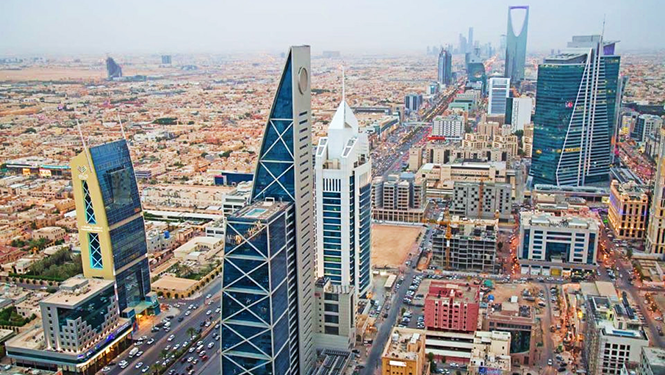
Riyadh city
The opening of the Riyadh Metro has positively impacted residential property prices in the capital city, with some villas located near metro stations seeing price increases of up to 78% compared to 2023, said Knight Frank, the global real estate consultancy, in a research report. 
The metro project has delivered immediate success, as the six-line, 85-station network transported more than 100 million passengers during the first nine months of operation, reflecting strong demand for improved connectivity and transportation within the city, it added.
Knight Frank compared villa prices in three distinct neighborhoods—Tuwaiq, Al Yarmouk, and Al Malqa—analyzing homes located within a 15-minute walking distance from metro stations versus those located farther away.
The study found that the direct impact on villa prices is already evident, showing the emergence of what it termed a “metro premium.” In Tuwaiq, property values near the metro rose by 20% between Q2 2023 and Q2 2025, compared to 10% growth in more distant areas. In Al Yarmouk, the effect was even more pronounced, with prices near the metro jumping 78%, versus 22% in outer areas. Even in Al Malqa, one of Riyadh’s most established neighborhoods, property values close to the metro increased by 20%.
Knight Frank estimated that about 1.5 million residents—roughly 18% of Riyadh’s population of 8.3 million—live within a 15-minute walking distance from a metro station, which is considered a significant figure for a newly launched network, meaning nearly one in five residents has enjoyed enhanced accessibility since day one.
“Current estimates also indicate that the metro could reduce approximately 250,000 daily car trips and save about 400,000 liters of fuel per day, reinforcing its role in advancing sustainable urban mobility,” it said.
The firm added that expansion plans, including a 65-kilometer corridor for the seventh metro line connecting Qiddiya, King Salman Park, Diriyah Gate, New Murabba, and King Khalid International Airport, will broaden the benefits of accessibility and sustainability while opening new horizons for urban development in the capital.
Knight Frank also highlighted that the metro network creates opportunities for developers and investors to build integrated urban communities around new stations and to redevelop areas that were previously considered distant or unattractive for investment.
It further noted that operating the metro in Riyadh along with carrying out supportive adjustments to land-use policies, such as increasing urban density around stations, could lead to transit-oriented development dynamics. These include more pedestrian activity that boosts retail trade, the emergence of new residential projects centered around stations, and a shift in residents’ preferences toward neighborhoods served by public transportation.
These effects gradually extend beyond areas directly adjacent to stations, as the metro cannot function in isolation from other means of transportation. To maximize its value, it must be supported by reliable buses and improved pedestrian networks. Recent passenger data underscores this interconnection, as buses across the Kingdom carried 23 million passengers in Q1 2025, a 34% increase compared to Q4 2024, the report added.
Knight Frank further stated that, although the number of bus passengers across the Kingdom fell by 7% in Q2 2025 quarter-on-quarter, Riyadh’s figures continued to rise, with the number of passengers increasing from 15 million to 15.6 million.
Riyadh city
The opening of the Riyadh Metro has positively impacted residential property prices in the capital city, with some villas located near metro stations seeing price increases of up to 78% compared to 2023, said Knight Frank, the global real estate consultancy, in a research report.
The metro project has delivered immediate success, as the six-line, 85-station network transported more than 100 million passengers during the first nine months of operation, reflecting strong demand for improved connectivity and transportation within the city, it added.
Knight Frank compared villa prices in three distinct neighborhoods—Tuwaiq, Al Yarmouk, and Al Malqa—analyzing homes located within a 15-minute walking distance from metro stations versus those located farther away.
The study found that the direct impact on villa prices is already evident, showing the emergence of what it termed a “metro premium.” In Tuwaiq, property values near the metro rose by 20% between Q2 2023 and Q2 2025, compared to 10% growth in more distant areas. In Al Yarmouk, the effect was even more pronounced, with prices near the metro jumping 78%, versus 22% in outer areas. Even in Al Malqa, one of Riyadh’s most established neighborhoods, property values close to the metro increased by 20%.
Knight Frank estimated that about 1.5 million residents—roughly 18% of Riyadh’s population of 8.3 million—live within a 15-minute walking distance from a metro station, which is considered a significant figure for a newly launched network, meaning nearly one in five residents has enjoyed enhanced accessibility since day one.
“Current estimates also indicate that the metro could reduce approximately 250,000 daily car trips and save about 400,000 liters of fuel per day, reinforcing its role in advancing sustainable urban mobility,” it said.
The firm added that expansion plans, including a 65-kilometer corridor for the seventh metro line connecting Qiddiya, King Salman Park, Diriyah Gate, New Murabba, and King Khalid International Airport, will broaden the benefits of accessibility and sustainability while opening new horizons for urban development in the capital.
Knight Frank also highlighted that the metro network creates opportunities for developers and investors to build integrated urban communities around new stations and to redevelop areas that were previously considered distant or unattractive for investment.
It further noted that operating the metro in Riyadh along with carrying out supportive adjustments to land-use policies, such as increasing urban density around stations, could lead to transit-oriented development dynamics. These include more pedestrian activity that boosts retail trade, the emergence of new residential projects centered around stations, and a shift in residents’ preferences toward neighborhoods served by public transportation.
These effects gradually extend beyond areas directly adjacent to stations, as the metro cannot function in isolation from other means of transportation. To maximize its value, it must be supported by reliable buses and improved pedestrian networks. Recent passenger data underscores this interconnection, as buses across the Kingdom carried 23 million passengers in Q1 2025, a 34% increase compared to Q4 2024, the report added.
Knight Frank further stated that, although the number of bus passengers across the Kingdom fell by 7% in Q2 2025 quarter-on-quarter, Riyadh’s figures continued to rise, with the number of passengers increasing from 15 million to 15.6 million.