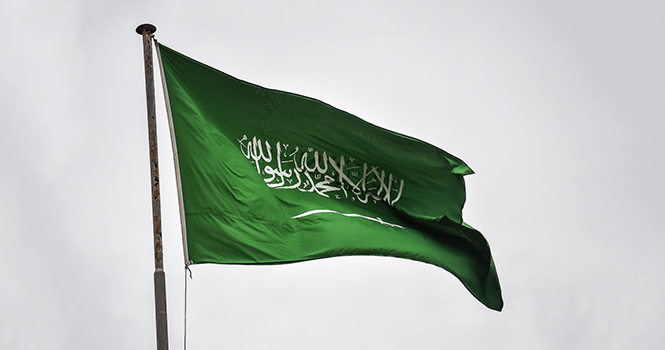
The Kingdom of Saudi Arabia’s flag
Saudi Arabia’s Ministry of Commerce and the Ministry of Industry and Mineral Resources announced the commencement of the Cabinet decision to amend several provisions in the Precious Metals and Gemstones Law, effective Oct. 11, according to an official statement issued today, Oct. 16. 
The decision transfers all responsibilities related to the oversight, regulation, and licensing of the precious metals and gemstones industry from the Ministry of Commerce to the Ministry of Industry and Mineral Resources.
The executive regulations of the law have been issued through a joint decision by the Minister of Commerce and the Minister of Industry and Mineral Resources, outlining detailed provisions.
Under the amendments, the Ministry of Commerce will supervise the trade of precious metals and gemstones and their products, including plated, coated, and inlaid items, as well as monitor retail outlets.
Meanwhile, the Ministry of Industry and Mineral Resources will oversee the manufacturing of these products and monitor industrial establishments.
The amendments stipulate that engaging in the manufacturing of precious metals and gemstones now requires an industrial license from the Ministry of Industry and Mineral Resources.
The Ministry of Commerce, in coordination with the Ministry of Industry, is also authorized to require the use of distinctive stamped marks on products, registered as specified by the regulations.
The updated regulation eliminates the recognition of standard purity grades if they fall short by more than four karats. It also requires an identification tag for any product containing gemstones, disclosing necessary information, and prohibits advertisements of precious metal and gemstone products unless the type, weight, purity, and price of each item are clearly stated.
In addition, establishments must issue a special invoice when purchasing from individuals, including the seller’s name, ID number, and nationality, along with the standard consumer sale requirements. They must also allocate a specific area within the store to display secondhand items or those embedded with synthetic diamonds or individual stones.
The Ministry of Industry and Mineral Resources urged all practitioners engaged in the manufacturing of precious metals and gemstones without a license to apply for regularization through the “Sanaei” platform within six months from the enforcement date.
Both ministries reaffirmed their commitment to implementing the law and its executive regulations to enhance the efficiency of the precious metals and gemstones sector in the Kingdom, strengthen consumer protection, and support product quality in the market.
The Kingdom of Saudi Arabia’s flag
Saudi Arabia’s Ministry of Commerce and the Ministry of Industry and Mineral Resources announced the commencement of the Cabinet decision to amend several provisions in the Precious Metals and Gemstones Law, effective Oct. 11, according to an official statement issued today, Oct. 16.
The decision transfers all responsibilities related to the oversight, regulation, and licensing of the precious metals and gemstones industry from the Ministry of Commerce to the Ministry of Industry and Mineral Resources.
The executive regulations of the law have been issued through a joint decision by the Minister of Commerce and the Minister of Industry and Mineral Resources, outlining detailed provisions.
Under the amendments, the Ministry of Commerce will supervise the trade of precious metals and gemstones and their products, including plated, coated, and inlaid items, as well as monitor retail outlets.
Meanwhile, the Ministry of Industry and Mineral Resources will oversee the manufacturing of these products and monitor industrial establishments.
The amendments stipulate that engaging in the manufacturing of precious metals and gemstones now requires an industrial license from the Ministry of Industry and Mineral Resources.
The Ministry of Commerce, in coordination with the Ministry of Industry, is also authorized to require the use of distinctive stamped marks on products, registered as specified by the regulations.
The updated regulation eliminates the recognition of standard purity grades if they fall short by more than four karats. It also requires an identification tag for any product containing gemstones, disclosing necessary information, and prohibits advertisements of precious metal and gemstone products unless the type, weight, purity, and price of each item are clearly stated.
In addition, establishments must issue a special invoice when purchasing from individuals, including the seller’s name, ID number, and nationality, along with the standard consumer sale requirements. They must also allocate a specific area within the store to display secondhand items or those embedded with synthetic diamonds or individual stones.
The Ministry of Industry and Mineral Resources urged all practitioners engaged in the manufacturing of precious metals and gemstones without a license to apply for regularization through the “Sanaei” platform within six months from the enforcement date.
Both ministries reaffirmed their commitment to implementing the law and its executive regulations to enhance the efficiency of the precious metals and gemstones sector in the Kingdom, strengthen consumer protection, and support product quality in the market.