‎How do analysts see Tadawul’s bearish performance?

‎How do analysts see Tadawul’s bearish performance? ‎How do analysts see Tadawul’s bearish performance?

​‎

Analysts surveyed by Argaam attributed the downturn witnessed in the Saudi Exchange (Tadawul) to several factors related to liquidity distribution and changes in investor sentiment, rather than fundamentals or corporate results.

The market did not react positively to earnings disclosures, despite most sectors posting strong performance, excluding petrochemicals, whose profits declined due to a natural sector cycle, said the analysts.

They also indicated that the weak liquidity was due to competition among debt instruments and Murabaha, on the one hand, and investors’ shift towards IPO opportunities and foreign markets, on the other.

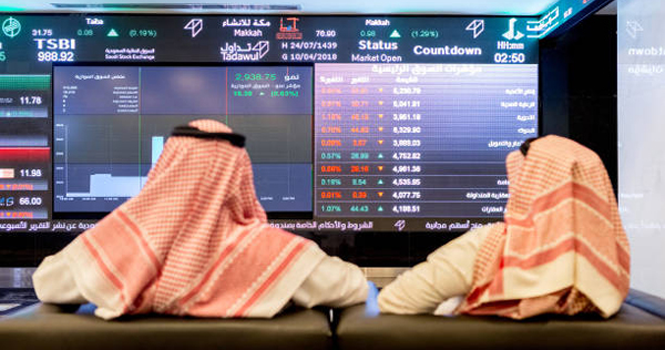
According to data available with Argaam, Tadawul’s benchmark index TASI lost nearly 9.5% of its year-to-date market capitalization, dragged by wide-range selling pressure across most sub-sectors.

During this period, listed companies were mostly in red. Stock prices of 210 players retreated, while only 40 others rose. The average daily trading value reached nearly SAR 5.47 billion, while the total number of executed transactions exceeded 71 million.

Meanwhile, Tadawul-listed companies, excluding Saudi Aramco, reported an 8% fall in the Q2 2025 aggregate net profit to SAR 38.29 billion, primarily due to the positive results of the petrochemicals and transportation sectors, according to Argaam’s data.

Including Saudi Aramco, the second-quarter combined net profit slipped 16% year-on-year (YoY) to around SAR 123.93 billion.

Financial Results Ex. One-Offs (SAR bln)​

Item

Q2 2024

Q2 2025

Change%

Aggregate Profit

147.87

123.92

(16%)

Aggregate Profit Ex-Aramco

41.71

38.29

(8%)

Aggregate Profit Ex. One-Offs​

40.84

43.95

+8%

Abdullatif Al-Saif, Founder and CEO of Sabeen Investment Co.
Abdullatif Al-Saif, Founder and CEO of Sabeen Investment Co., said that Tadawul did not react positively to the second-quarter results.
In an interview with Argaam, he indicated that several factors were behind this, including a decline in overall market profits compared to last year, especially in some heavyweight sectors such as energy and petrochemicals, in addition to lower-than-expected profits for some newly listed companies for which there had been optimistic views about generating greater growth.
“The market was negatively affected by external events, including fears of trade tensions and oil price fluctuations, in addition to a decline in trading volumes, reflecting weak investor sentiment,” said the analyst.
He highlighted that the presence of competitive investment alternatives, such as debt instruments and Murabaha, which provide strong returns, relatively reduces the attractiveness of the stock market.
Furthermore, some investors are moving to foreign markets, most notably the US market, which has performed positively over the past period, Al-Saif added.
Tarek Fadlallah, CEO of Nomura Asset Management – Middle East
For his part, Tarek Fadlallah, CEO of Nomura Asset Management – Middle East, stated that the benchmark index TASI did not respond to Q2 2025 financial results in the banking and telecommunications sectors because the index remains concentrated in a limited number of leading heavyweight companies and does not necessarily reflect the broad market base.
The market’s aggregate profits declined by about 8% even after excluding the significant impact of Aramco’s earnings, which weighed on investor sentiment, he added.
Reasons for Weak Liquidity
Commenting on weak market liquidity, Al-Saif indicated that competition with other investment channels, such as debt instruments and Murabaha, played a major role. He added that Tadawul witnessed remarkable activity in IPOs and rights issues, which led to the distribution of available liquidity among these opportunities rather than trading existing shares.
The summer vacation period also contributed to weak individual investor participation. In addition, some investors continued to move toward top-performing global markets, such as the US market, he added.
Corporate Earnings Surprises
Al-Saif confirmed that Q2 2025 financial results carried positive surprises in some sectors, especially in banking, transportation, and capital goods related to infrastructure projects.
Meanwhile, negative surprises occurred in the retail, energy, and consumer services sectors, in addition to the media and entertainment sector.
Unjustified Decline
Fadi Arabid, Founding Partner and CIO of Amwal Capital
For his part, Fadi Arabid, Founding Partner and CIO of Amwal Capital, said that the current decline in the Saudi market is fundamentally unjustified, noting that corporate earnings remain generally strong in most sectors, except for petrochemicals, whose current weakness is a natural cycle associated with the sector.
Other Gulf markets, especially the UAE, have recently recorded strong gains, backed by similar positive earnings surprises, he further stated.
Tadawul has historically traded at a significant premium compared to its emerging market peers, such as the MSCI Emerging Markets Index. However, this premium is now almost disappearing, making current valuations attractive, especially given the Kingdom’s financial strength and the robustness of its companies’ profits, according to the analyst.
He indicated that the recent market weakness appears to be more closely linked to changes in investor flows, noting that individuals, in particular, shifted toward fixed-income instruments with higher returns, such as the tier I issues of Saudi banks, which offer returns between 5.5% and 6.5%. However, this trend does not take into account both the healthy dividends and medium-term growth opportunities for Saudi companies.
Market Outlook
Al-Saif expects the local market to witness a gradual recovery over the coming period, especially after the end of the summer vacation, driven by expectations of lower global interest rates, stable oil prices, continued growth in the non-oil economy, and increased government investment in major projects.
The performance may vary among companies in H2 2025 based on their profitability growth. Key risks facing the market include the possibility of a decline in oil prices, a slowdown in the global economy, and a rise in global inflation, which could delay interest rate cuts, in addition to any potential slowdown in government spending on infrastructure and projects, according to the analyst
For his part, Arabid said the current correction may be driven by changes in liquidity rather than profits, which constitutes an attractive opportunity for investors seeking long-term exposure to the Saudi market.
Fadlallah indicated that falling oil prices and rising interest rates have been the main factors pressuring the market since the beginning of the year. He noted that even with the possibility of a slight decline in interest rates starting in September, investors will remain concerned about the earnings prospects next year if oil prices do not rebound.


Analysts surveyed by Argaam attributed the downturn witnessed in the Saudi Exchange (Tadawul) to several factors related to liquidity distribution and changes in investor sentiment, rather than fundamentals or corporate results.

The market did not react positively to earnings disclosures, despite most sectors posting strong performance, excluding petrochemicals, whose profits declined due to a natural sector cycle, said the analysts.

They also indicated that the weak liquidity was due to competition among debt instruments and Murabaha, on the one hand, and investors’ shift towards IPO opportunities and foreign markets, on the other.

According to data available with Argaam, Tadawul’s benchmark index TASI lost nearly 9.5% of its year-to-date market capitalization, dragged by wide-range selling pressure across most sub-sectors.

During this period, listed companies were mostly in red. Stock prices of 210 players retreated, while only 40 others rose. The average daily trading value reached nearly SAR 5.47 billion, while the total number of executed transactions exceeded 71 million.

Meanwhile, Tadawul-listed companies, excluding Saudi Aramco, reported an 8% fall in the Q2 2025 aggregate net profit to SAR 38.29 billion, primarily due to the positive results of the petrochemicals and transportation sectors, according to Argaam’s data.

Including Saudi Aramco, the second-quarter combined net profit slipped 16% year-on-year (YoY) to around SAR 123.93 billion.

Financial Results Ex. One-Offs (SAR bln)​

Item

Q2 2024

Q2 2025

Change%

Aggregate Profit

147.87

123.92

(16%)

Aggregate Profit Ex-Aramco

41.71

38.29

(8%)

Aggregate Profit Ex. One-Offs​

40.84

43.95

+8%

Abdullatif Al-Saif, Founder and CEO of Sabeen Investment Co.
Abdullatif Al-Saif, Founder and CEO of Sabeen Investment Co., said that Tadawul did not react positively to the second-quarter results.
In an interview with Argaam, he indicated that several factors were behind this, including a decline in overall market profits compared to last year, especially in some heavyweight sectors such as energy and petrochemicals, in addition to lower-than-expected profits for some newly listed companies for which there had been optimistic views about generating greater growth.
“The market was negatively affected by external events, including fears of trade tensions and oil price fluctuations, in addition to a decline in trading volumes, reflecting weak investor sentiment,” said the analyst.
He highlighted that the presence of competitive investment alternatives, such as debt instruments and Murabaha, which provide strong returns, relatively reduces the attractiveness of the stock market.
Furthermore, some investors are moving to foreign markets, most notably the US market, which has performed positively over the past period, Al-Saif added.
Tarek Fadlallah, CEO of Nomura Asset Management – Middle East
For his part, Tarek Fadlallah, CEO of Nomura Asset Management – Middle East, stated that the benchmark index TASI did not respond to Q2 2025 financial results in the banking and telecommunications sectors because the index remains concentrated in a limited number of leading heavyweight companies and does not necessarily reflect the broad market base.
The market’s aggregate profits declined by about 8% even after excluding the significant impact of Aramco’s earnings, which weighed on investor sentiment, he added.
Reasons for Weak Liquidity
Commenting on weak market liquidity, Al-Saif indicated that competition with other investment channels, such as debt instruments and Murabaha, played a major role. He added that Tadawul witnessed remarkable activity in IPOs and rights issues, which led to the distribution of available liquidity among these opportunities rather than trading existing shares.
The summer vacation period also contributed to weak individual investor participation. In addition, some investors continued to move toward top-performing global markets, such as the US market, he added.
Corporate Earnings Surprises
Al-Saif confirmed that Q2 2025 financial results carried positive surprises in some sectors, especially in banking, transportation, and capital goods related to infrastructure projects.
Meanwhile, negative surprises occurred in the retail, energy, and consumer services sectors, in addition to the media and entertainment sector.
Unjustified Decline
Fadi Arabid, Founding Partner and CIO of Amwal Capital
For his part, Fadi Arabid, Founding Partner and CIO of Amwal Capital, said that the current decline in the Saudi market is fundamentally unjustified, noting that corporate earnings remain generally strong in most sectors, except for petrochemicals, whose current weakness is a natural cycle associated with the sector.
Other Gulf markets, especially the UAE, have recently recorded strong gains, backed by similar positive earnings surprises, he further stated.
Tadawul has historically traded at a significant premium compared to its emerging market peers, such as the MSCI Emerging Markets Index. However, this premium is now almost disappearing, making current valuations attractive, especially given the Kingdom’s financial strength and the robustness of its companies’ profits, according to the analyst.
He indicated that the recent market weakness appears to be more closely linked to changes in investor flows, noting that individuals, in particular, shifted toward fixed-income instruments with higher returns, such as the tier I issues of Saudi banks, which offer returns between 5.5% and 6.5%. However, this trend does not take into account both the healthy dividends and medium-term growth opportunities for Saudi companies.
Market Outlook
Al-Saif expects the local market to witness a gradual recovery over the coming period, especially after the end of the summer vacation, driven by expectations of lower global interest rates, stable oil prices, continued growth in the non-oil economy, and increased government investment in major projects.
The performance may vary among companies in H2 2025 based on their profitability growth. Key risks facing the market include the possibility of a decline in oil prices, a slowdown in the global economy, and a rise in global inflation, which could delay interest rate cuts, in addition to any potential slowdown in government spending on infrastructure and projects, according to the analyst
For his part, Arabid said the current correction may be driven by changes in liquidity rather than profits, which constitutes an attractive opportunity for investors seeking long-term exposure to the Saudi market.
Fadlallah indicated that falling oil prices and rising interest rates have been the main factors pressuring the market since the beginning of the year. He noted that even with the possibility of a slight decline in interest rates starting in September, investors will remain concerned about the earnings prospects next year if oil prices do not rebound.
Add a comment

Leave a Reply

Your email address will not be published. Required fields are marked *

Keep Up to Date with our Weekly Newsletter

By pressing the Subscribe button, you confirm that you have read and are agreeing to our Privacy Policy and Terms of Use
Advertisement